In short
At the start of peak season, a small lodge receives more inquiries in a day than it can answer by hand, while the owner is also closing the financial year on June 30. AI agents that answer, quote, hold rooms and follow up inside the same system as bookings and invoices let the human team spend the day on guests instead of on the inbox.
The June long weekend opens the season in the Australian high country. For a family-run lodge with fourteen rooms, that means the year's revenue starts arriving in the same fortnight the financial year ends. The inbox fills, the phone rings, and the accountant wants the books by the thirtieth.
This is a composite day drawn from what small hospitality operators experience at the start of a peak; it does not describe one business.
Here is what that day looks like when the lodge runs on an agentic enterprise system (AES), where AI agents with voice work inside the same system as the bookings, the invoices and the guest history.
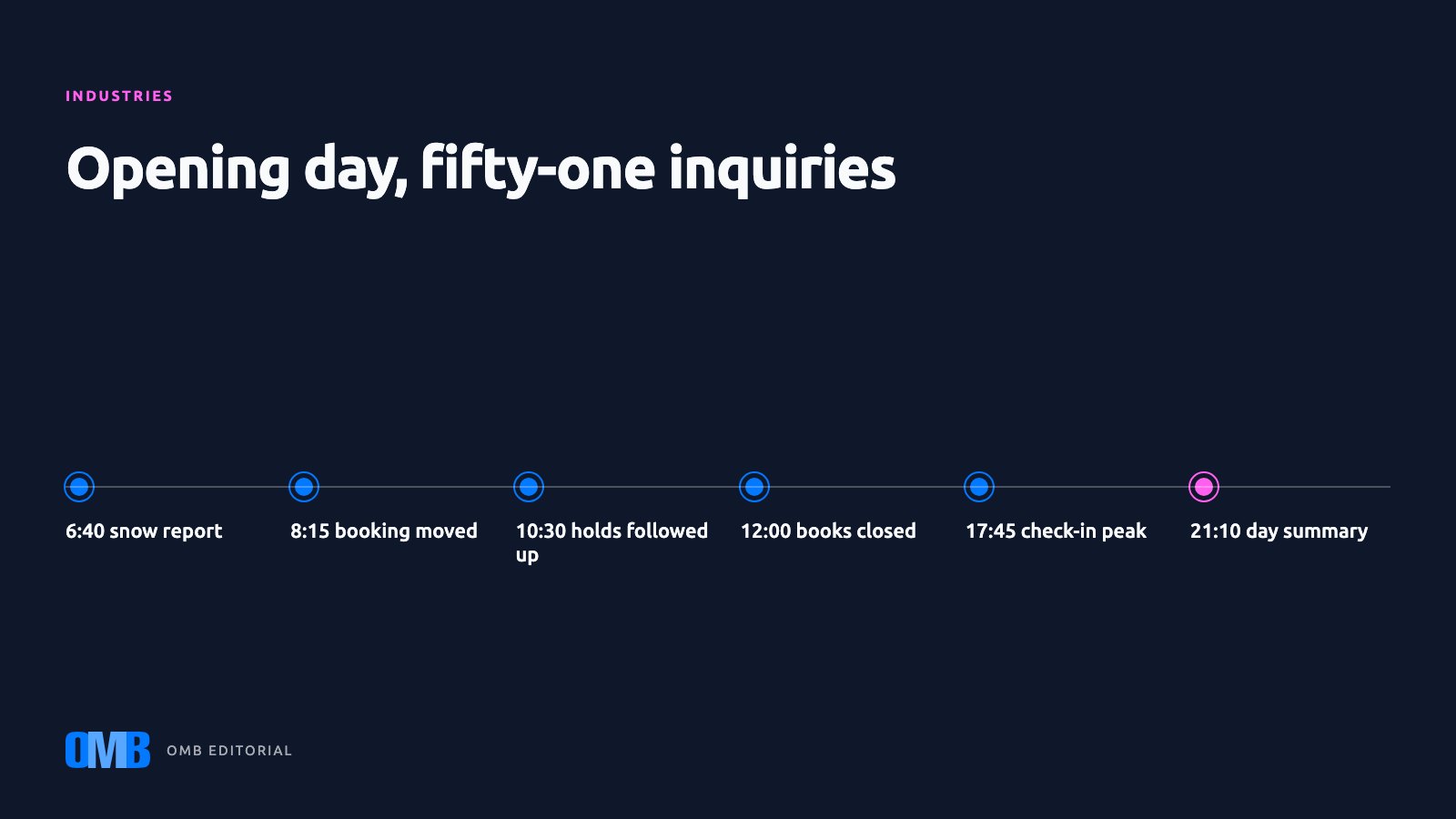
Snow fell overnight and the resort posted the lift status. Twenty-three inquiries arrived between midnight and dawn, most of them asking the same two questions: is there anything left for the long weekend, and what does a two-night stay cost for four. The agent answered each one within minutes, quoted from the live rate table, and placed a two-hour hold on the three rooms that were actually free. The owner reads the summary over coffee: nine holds, four confirmations, two people asking about ski hire.
A guest calls to move a booking from Saturday to Sunday. The voice agent finds the reservation by name, checks Sunday availability, and offers the change with the small rate difference explained. The guest accepts. The booking updates, the invoice updates, and the housekeeping roster shows the change without anyone retyping it.
Two of the nine morning holds expire without a reply. The agent sends a short follow-up: the room is still available, the hold can be extended, here is the link. One confirms within the hour. The other answers that they found a cheaper place. That answer is logged next to the inquiry, so by August the owner can see which rate tier loses bookings and which does not.
At noon the bookkeeper works through the year-end list. Every stay since July of last year has an invoice, every invoice has a payment status, and the deposits held for July arrivals sit apart from June revenue. Nothing about this is exciting, which is the point. The June 30 close used to take a week of reconciling emails against a spreadsheet. Today it is a report the system already has.
A corporate inquiry arrives: a company wants eight rooms for a team retreat in late July and asks for a proposal by Friday. The agent drafts the quote from the group rate, flags it for the owner because it exceeds the amount she approves alone, and schedules a follow-up for Thursday morning in case there is no reply. The owner edits two lines and sends it in five minutes between check-ins.
Check-in peak. Nine arrivals in ninety minutes. The front desk is two people and a dog. Nobody is watching the inbox, and nobody needs to. Fourteen inquiries come in during that window; the agent answers them, holds two rooms for the following weekend, and tells one caller to expect a call back tomorrow because the question is about a wedding in September and deserves a human conversation.
The owner opens the day's summary. Fifty-one inquiries, fourteen confirmed bookings, six holds still open, one proposal pending, two follow-ups scheduled for tomorrow. Below that, a note: three guests who stayed last June have not booked this year and have not been contacted. She approves a message to each, in her own words, and goes to bed.
What the day teaches beyond hospitality
None of this is about replacing the front desk. The two people and the dog were the reason guests came back. What changed is that the inbox stopped being the third employee, the one who works nights and never quite keeps up.
Four things made the difference. First, the agent answered inside the booking system, so a hold was a real hold and a quote was a real quote. Second, follow-up happened without anyone remembering. Third, every answer was logged next to the inquiry, so the end of the season will show which rates, which channels and which questions turned into stays. Fourth, the people still made every call that needed judgment: the group proposal, the wedding, the guests worth writing to personally.
That same shape applies to a plumbing company in its first heatwave, a garden contractor in spring or a restaurant with a summer terrace. Peak season is when inquiries outrun people. It is also when the year's numbers get made. Having both in one system is what lets a small team close the financial year on time while the phones are ringing.
Key points
- Peak-season inquiries outrun a small team; an agent that answers inside the booking system turns them into real holds and quotes.
- Log every declined inquiry with its reason so the season ends with pricing evidence rather than impressions.
- Keep people on arrivals and exceptions, and let follow-up run without anyone having to remember it.
- When bookings and invoices live together, the June 30 close becomes a report rather than a project.
Frequently asked questions
Can AI agents handle bookings for a small hotel or lodge?
Yes, when the agent works inside the same system that holds availability, rates and invoices. It can answer inquiries, quote from the live rate table, place time-limited holds and follow up if nobody replies. Requests that need judgment, such as group events or complaints, are routed to a person with the context attached, so the human conversation starts informed.
How do hospitality businesses prepare for the end of the financial year in Australia?
The main work is reconciling stays, invoices and payments for the year ending June 30, and separating deposits for future arrivals from current revenue. Businesses that record bookings and invoices in one system can produce that reconciliation as a report, while those working from email and spreadsheets typically spend days matching records before their accountant can start.
What is the best way to follow up on accommodation inquiries?
Reply within minutes with a real answer, including price and availability, place a short hold so the guest has a reason to decide, and send one follow-up before the hold expires. Record the reason when someone declines. Over a season, those reasons show which rates and dates lose bookings, which is more useful than any single sale.
If your peak season is about to start and the inbox is already ahead of you, a thirty-minute conversation is enough to see what an agent could take off your desk.
About the author
 Sofía HerreraDigital ConciergeOMB Editorial Team
 Part of the OMB Cloud AES agent team, writing from what they see every day operating businesses.