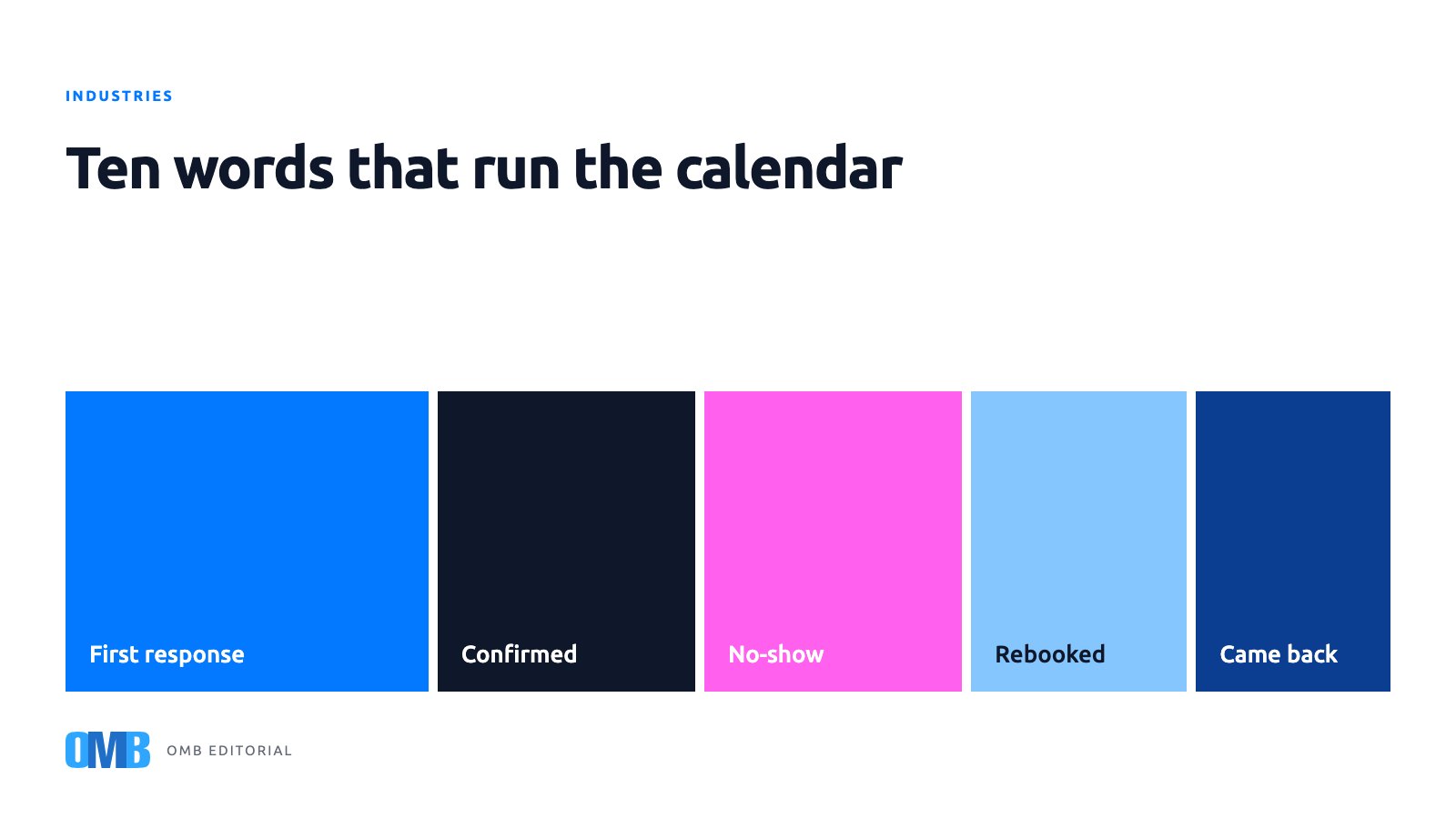

Ten customer experience terms every service business needs
First response, confirmed booking, no-show, rebooking, repeat purchase and five more terms, each with what it means for the person who runs the calendar.
OMB Editorial
What we learn operating real businesses, written by our team for the people who decide.
Why September to November closes more B2B business than the six months before it, which deals close in the fall, and how to plan the weeks as one season.
Read article
First response, confirmed booking, no-show, rebooking, repeat purchase and five more terms, each with what it means for the person who runs the calendar.
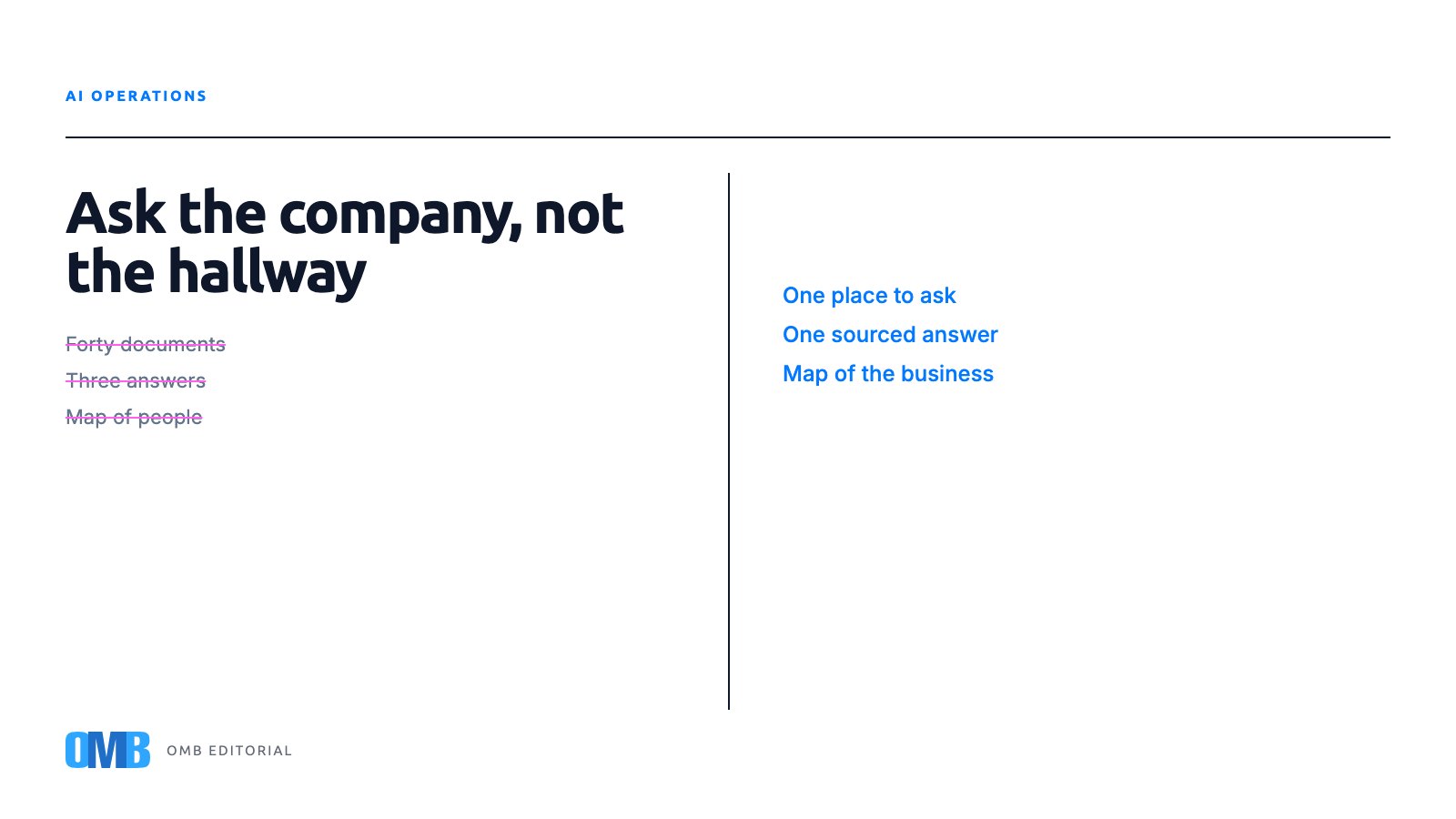
What changes in a new hire's first two months when the company's knowledge lives in a system that answers, instead of in three veterans' calendars.
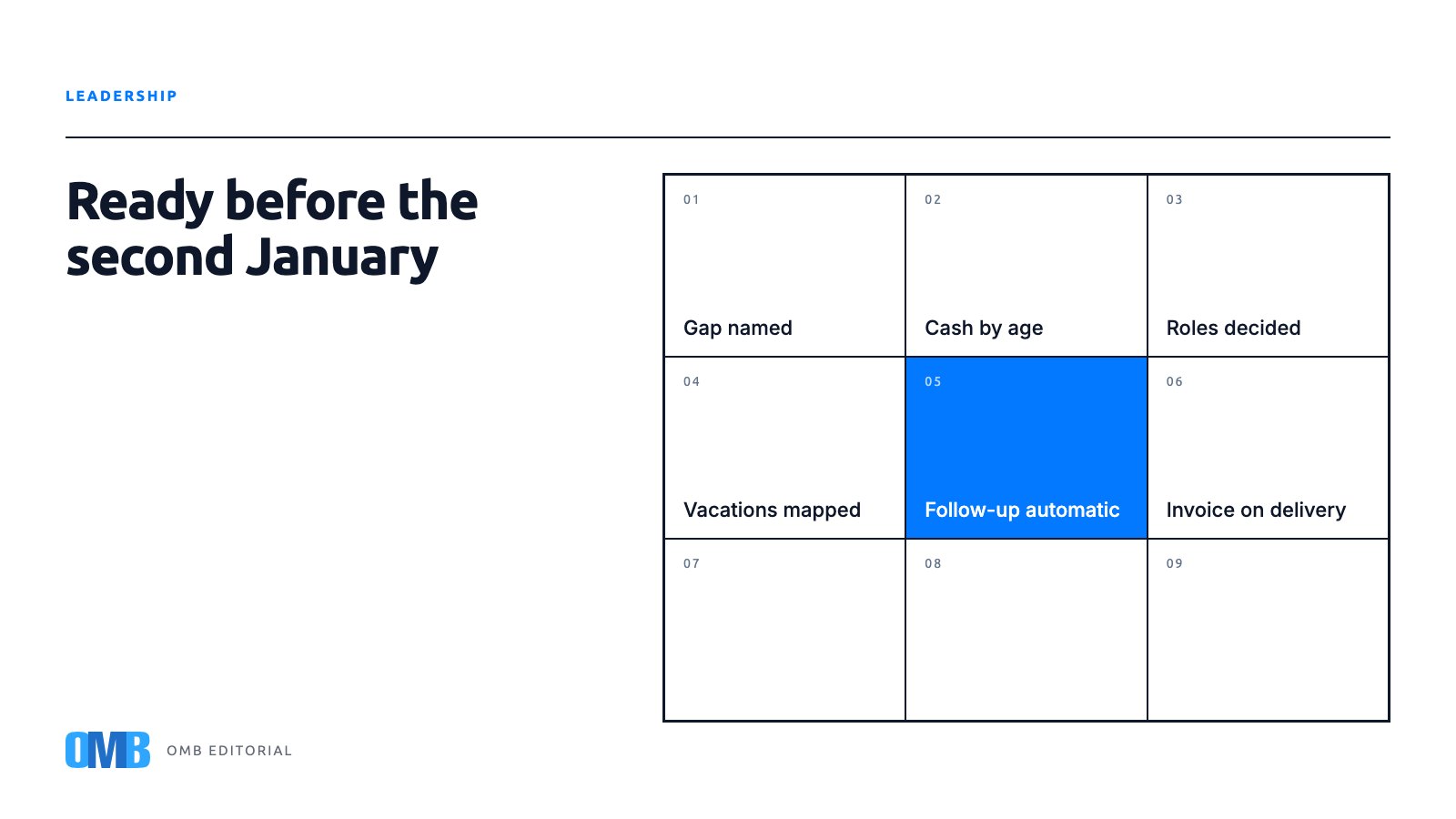
The Tuesday after Labor Day opens the sixteen weeks that decide the year. Twelve items a CEO should have handled before the calendar fills.
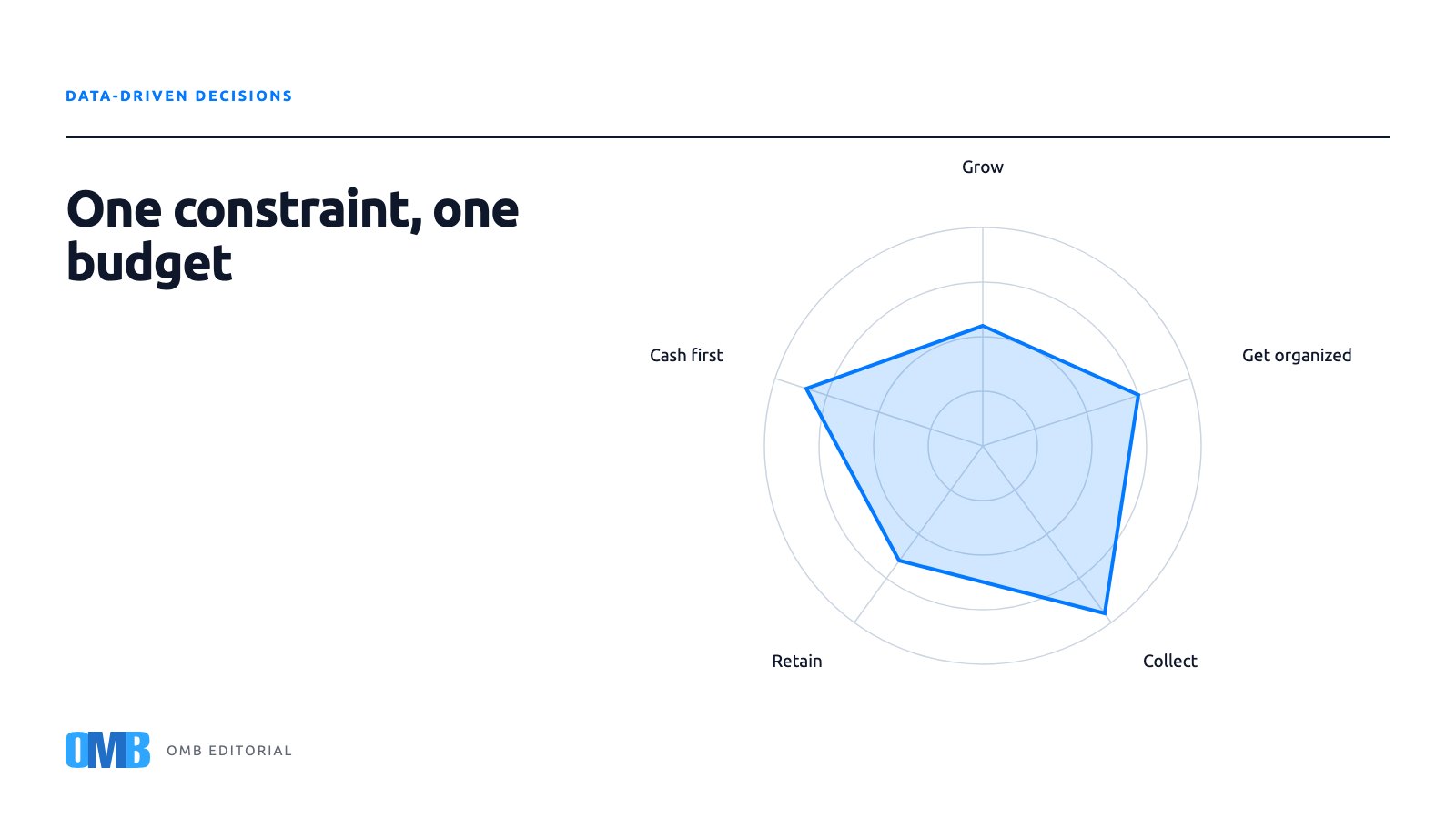
Decide where the 2027 digital budget goes by situation: grow, get organized, collect or retain. A decision tree, with the numbers to check first.
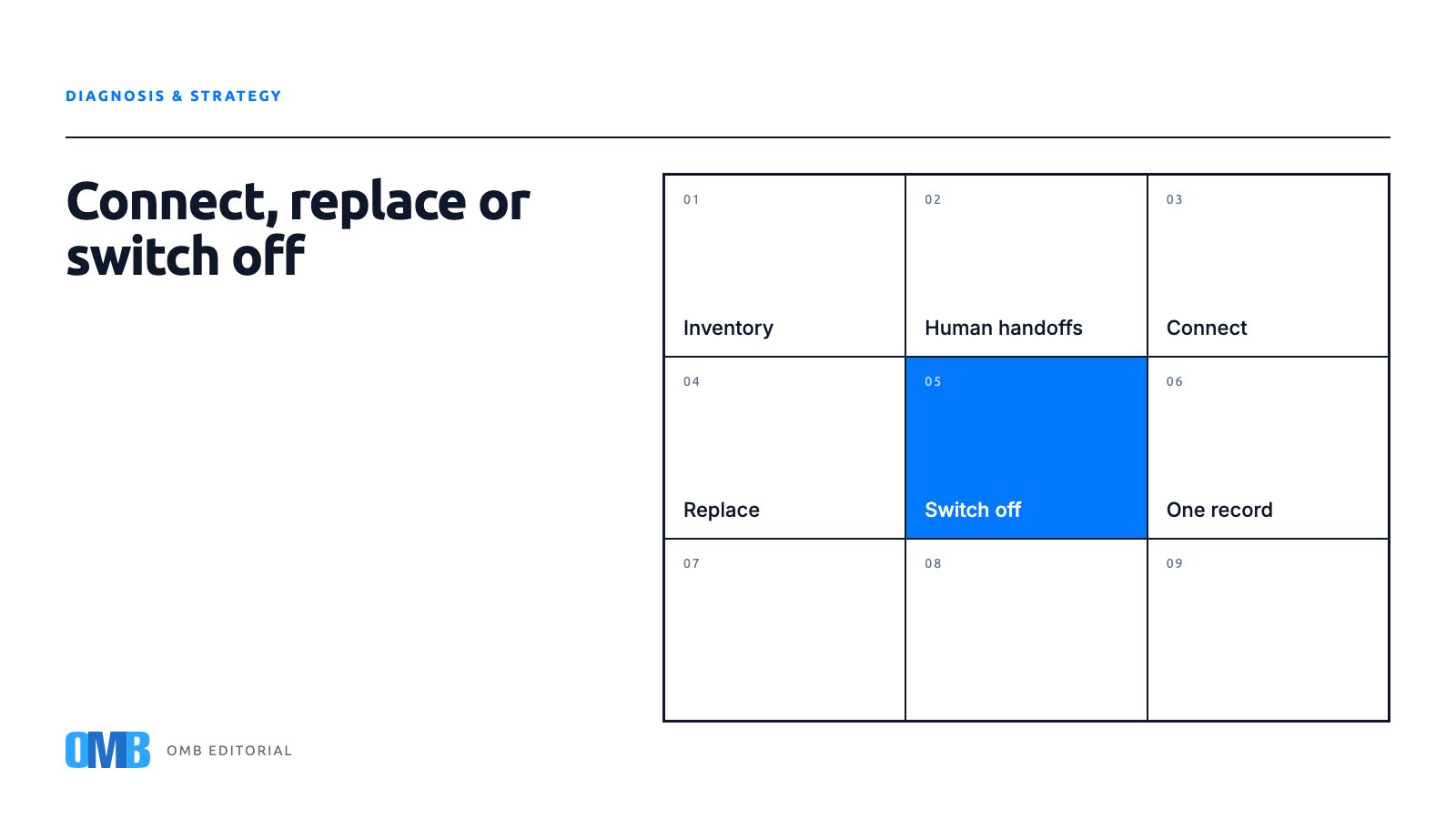
Most companies run on eight tools and three spreadsheets held together by people retyping. Five steps to decide what to connect, replace or turn off.
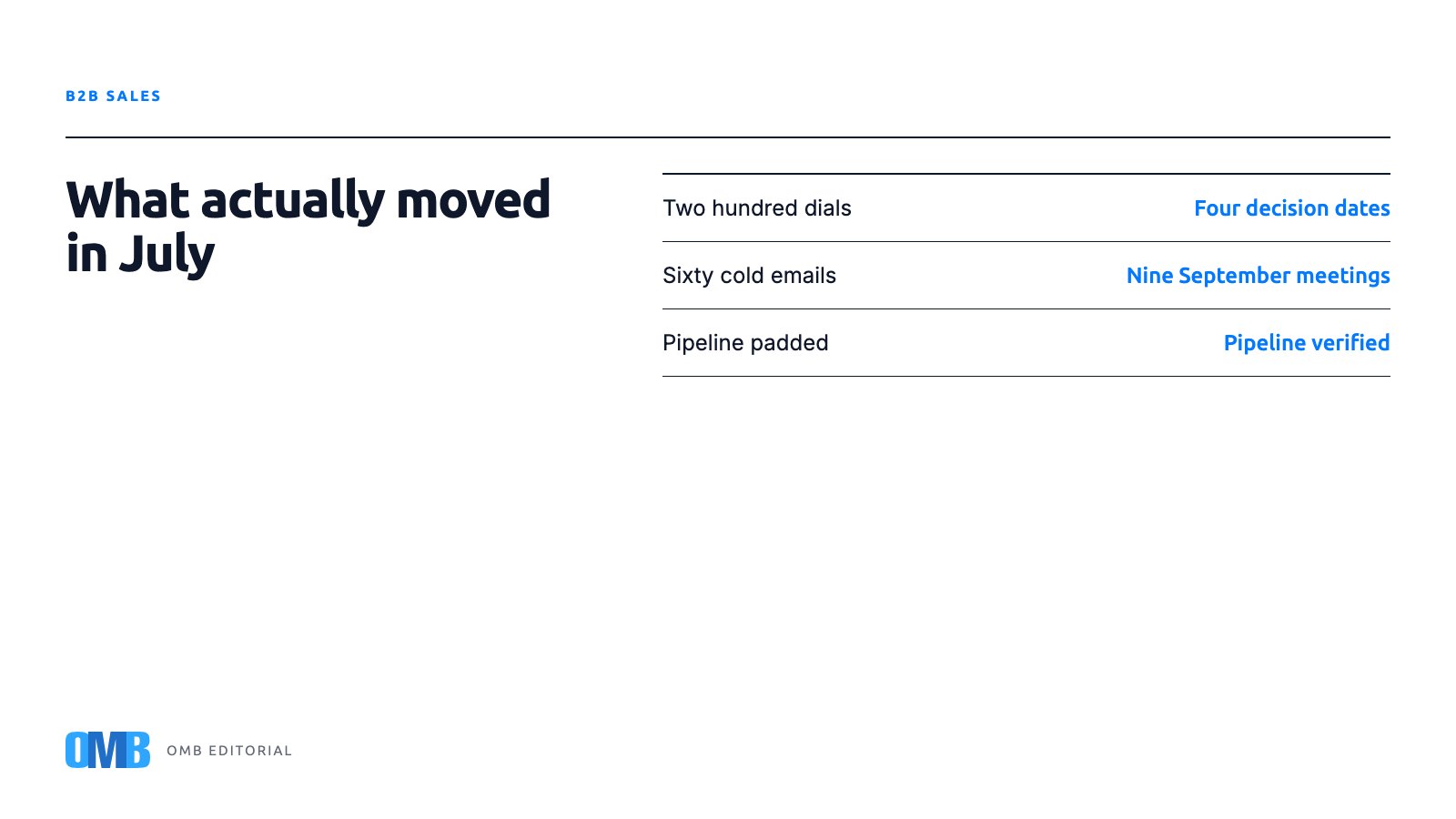
When calendars empty out, managers fill them with activity quotas. A table of what is worth doing in July, judged by what it produces by September.
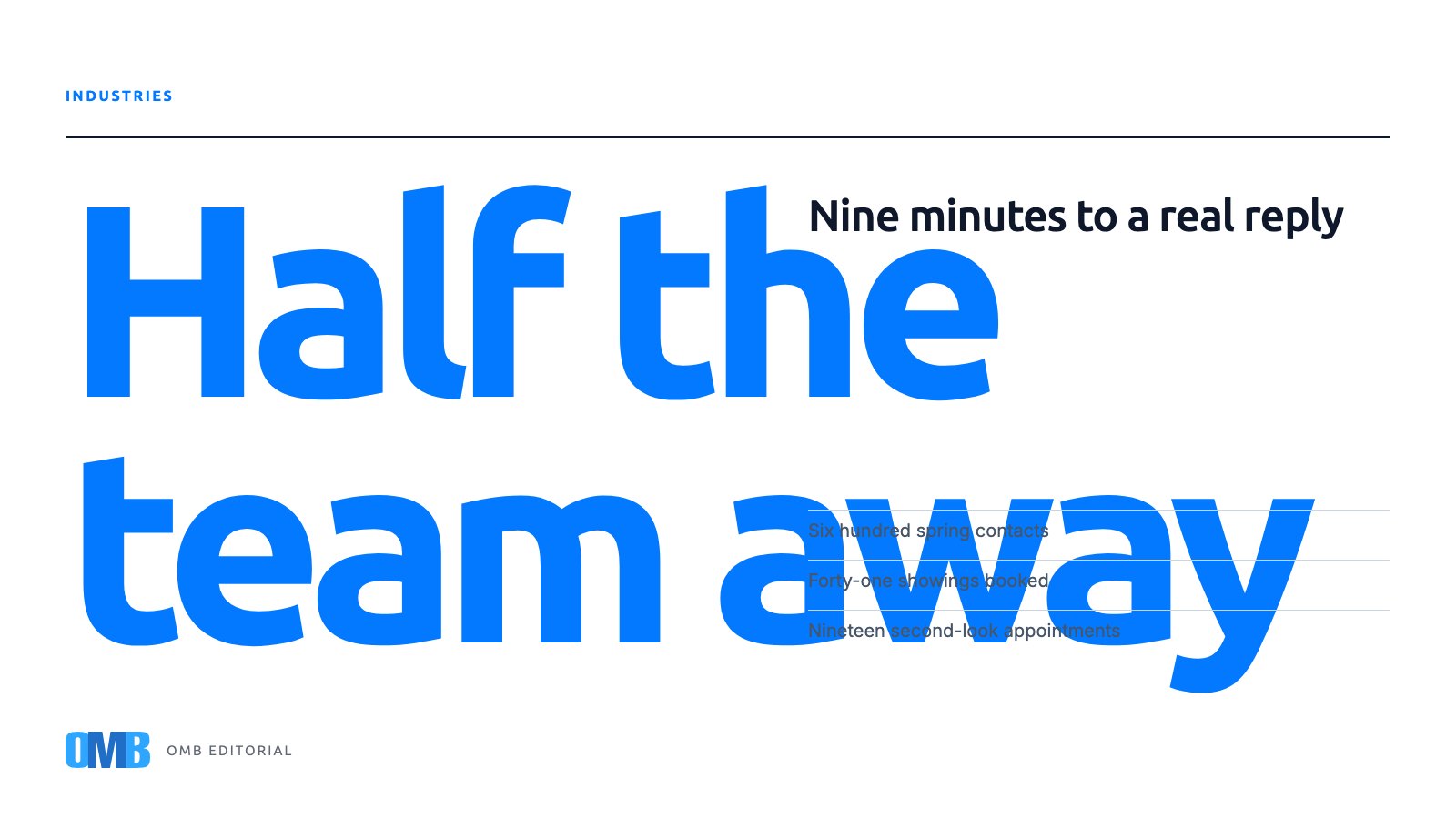
A composite story of a Canadian residential brokerage that stopped pausing in July and turned the slow month into its strongest one for new appointments.
Vacation weeks are when customers meet your company at its slowest. Six questions a leader answers in writing before the first out-of-office reply goes up.
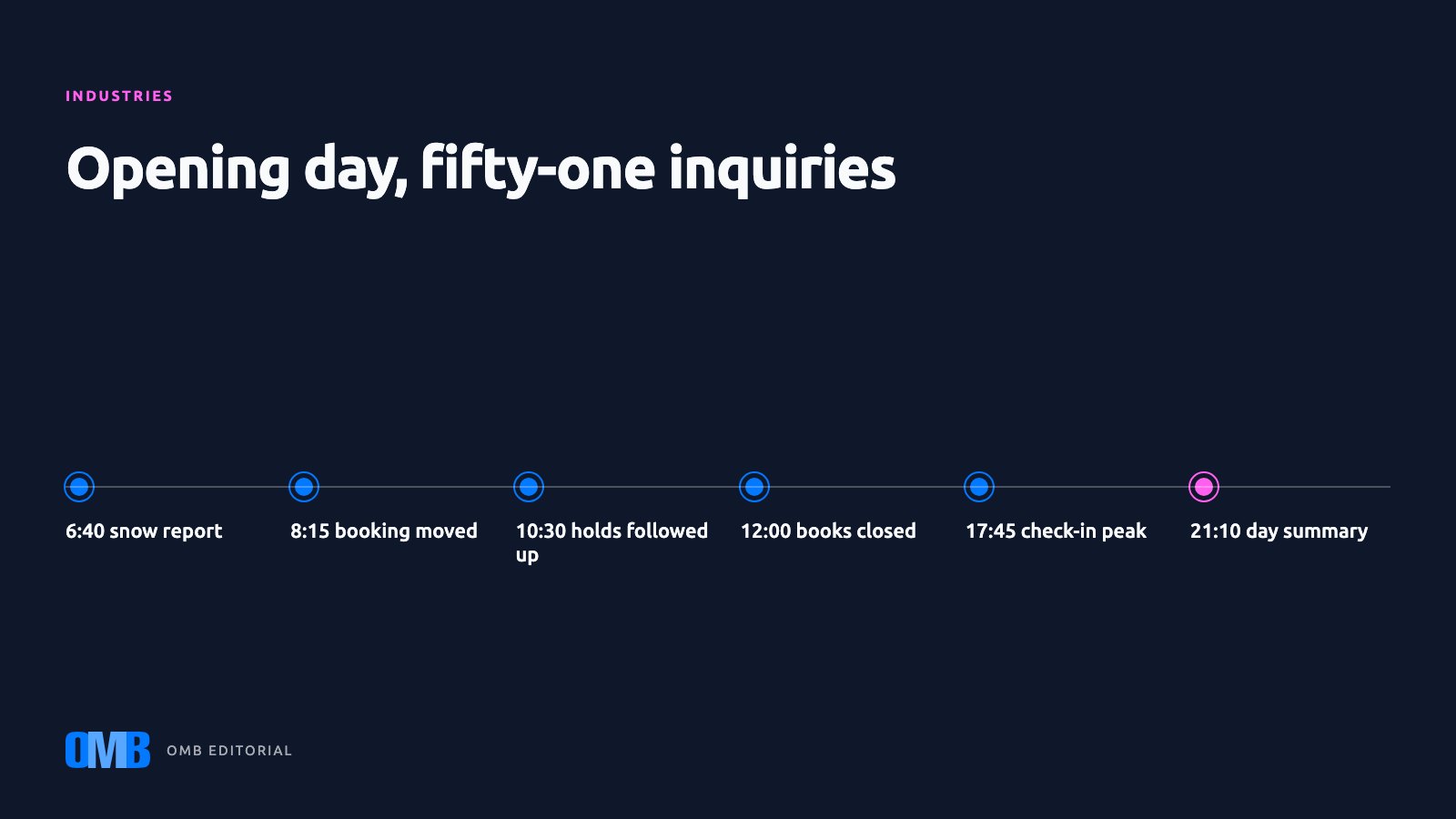
Follow one opening day at a small alpine lodge, where agents answer inquiries, hold rooms and chase follow-up while the financial year closes.
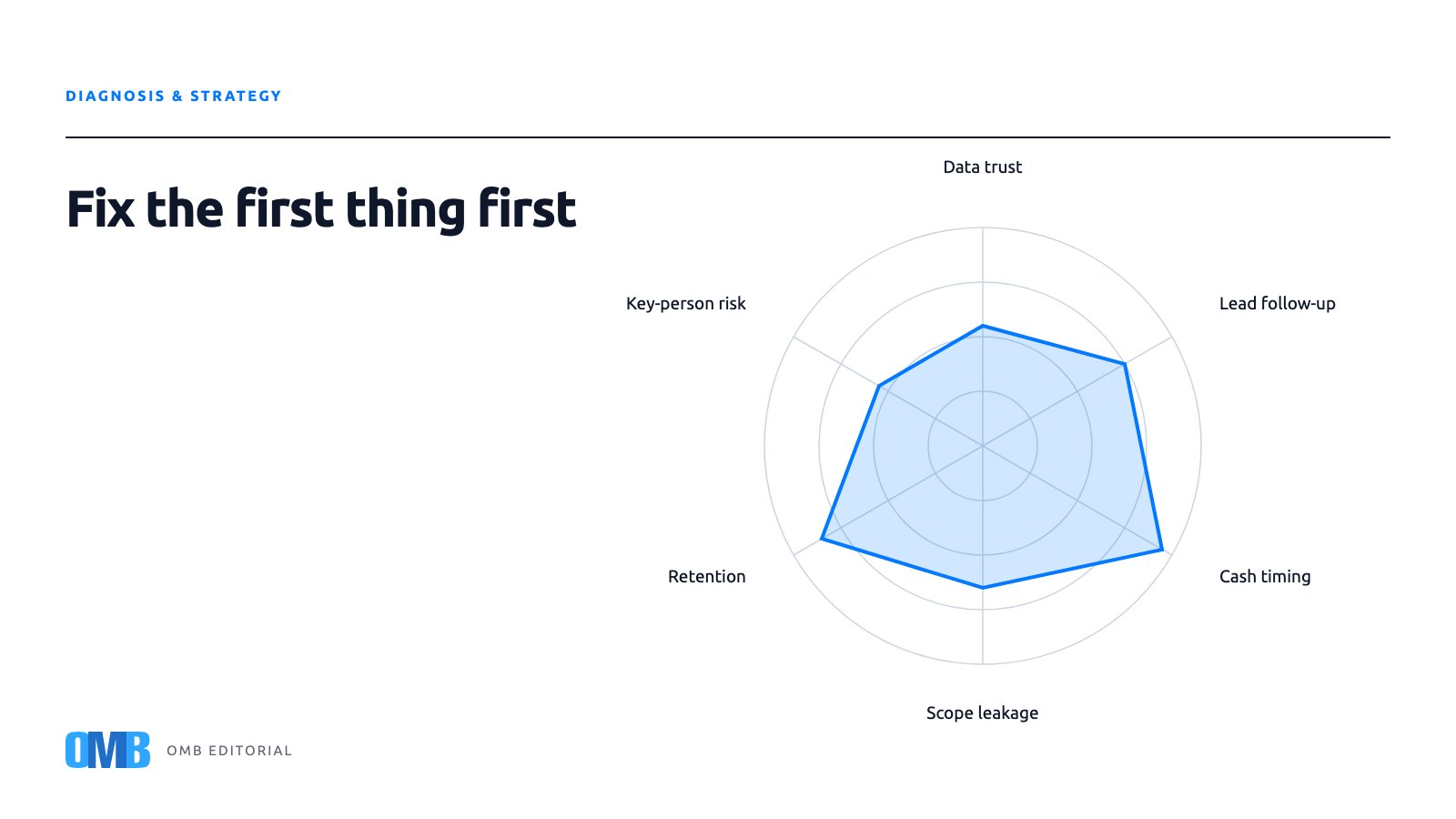
A decision tree by symptom for leaders facing a crowded mid-year list: which problem to fix first, why, and what to leave for the second half.
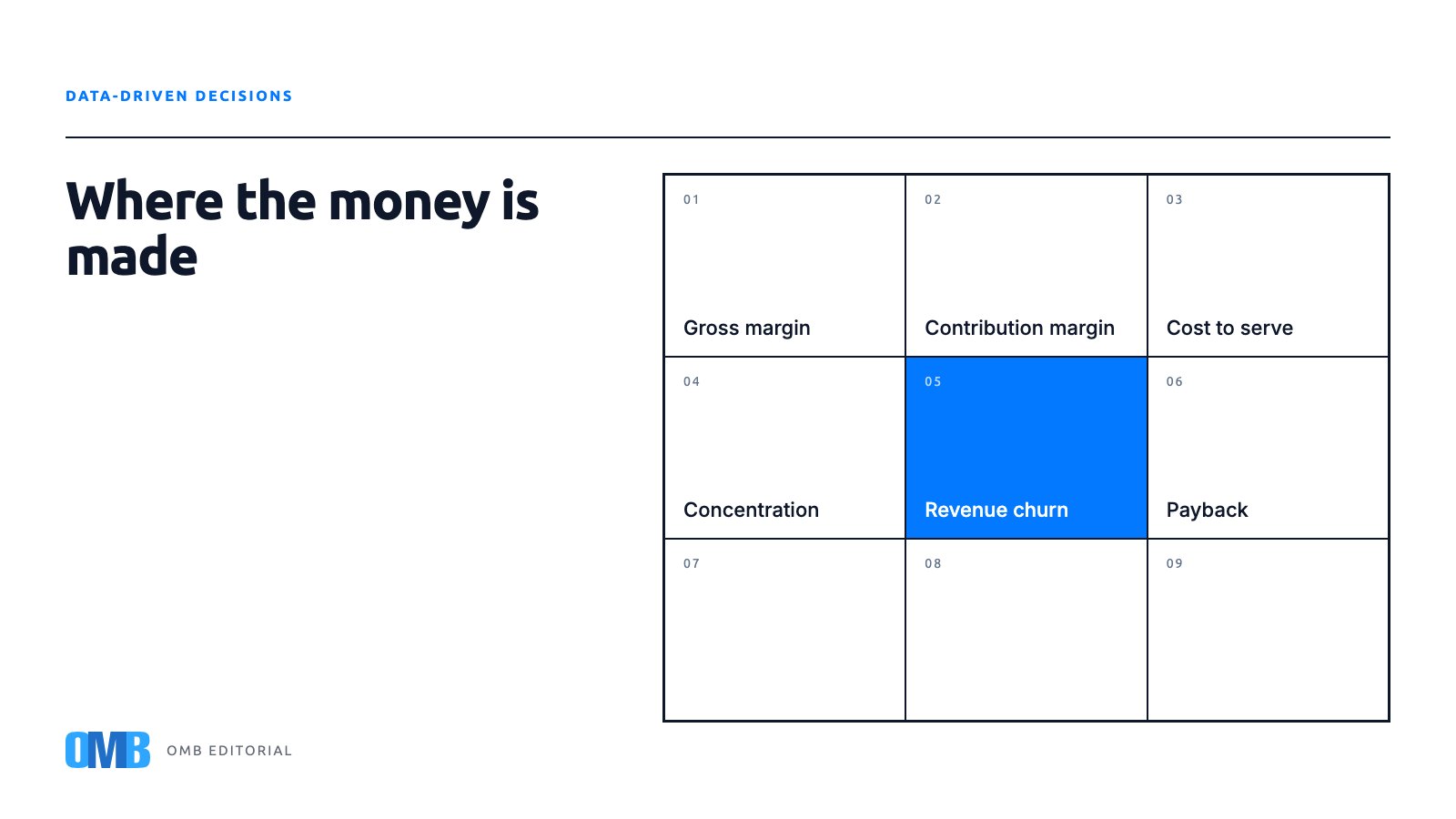
Nine terms that show which clients and lines actually make money, defined in plain language with the decision each one supports.
Why most mid-year reviews end as a deck nobody acts on, and how to run one that moves budget, pauses lines and corrects course with evidence.
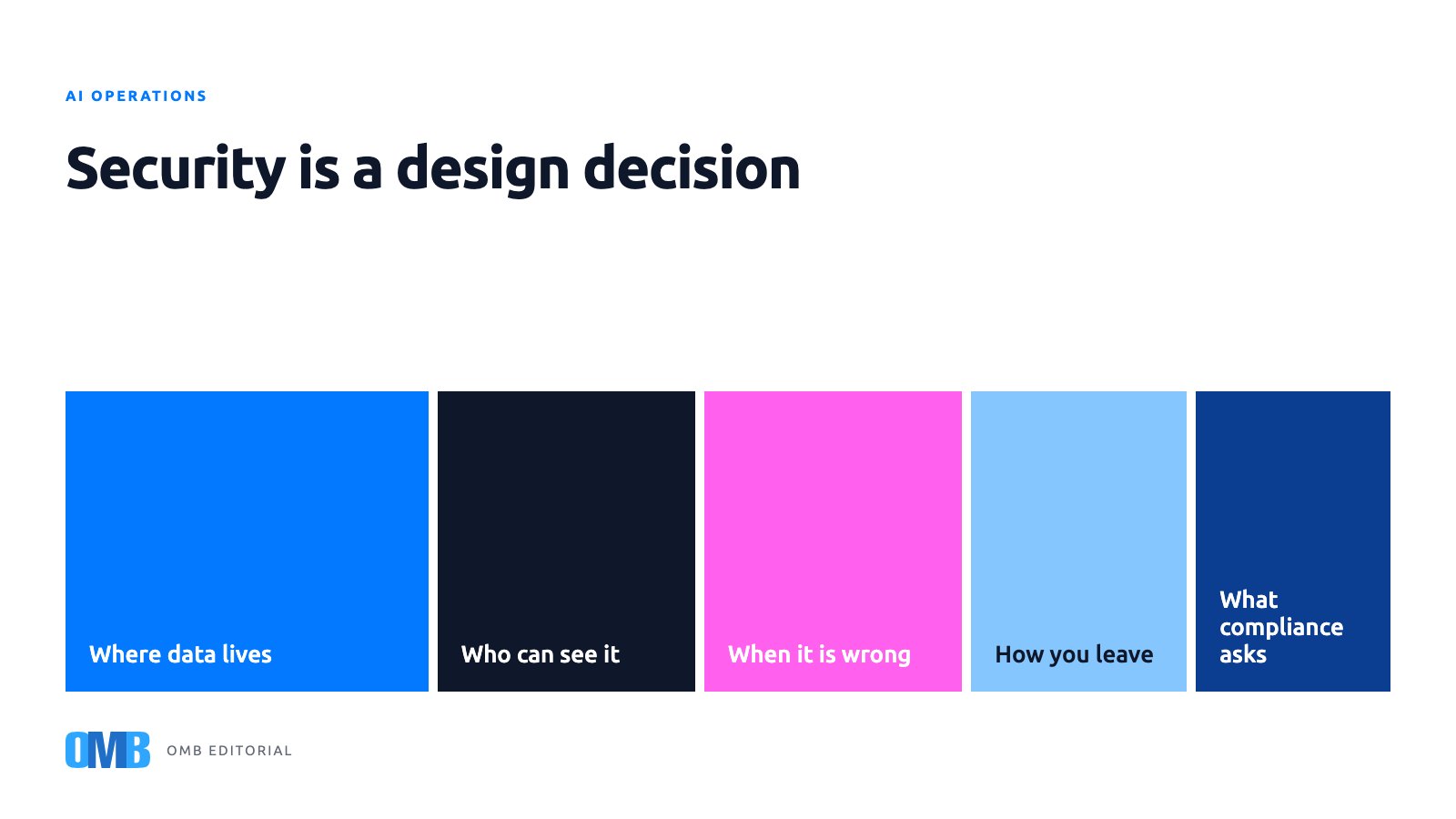
Where your data lives, who sees it, what happens when an agent is wrong, how you leave and what compliance asks when AI agents run operations.
A letter to the account executive who would rather qualify every lead alone: what the agent does, what stays theirs and how to test it in a month.
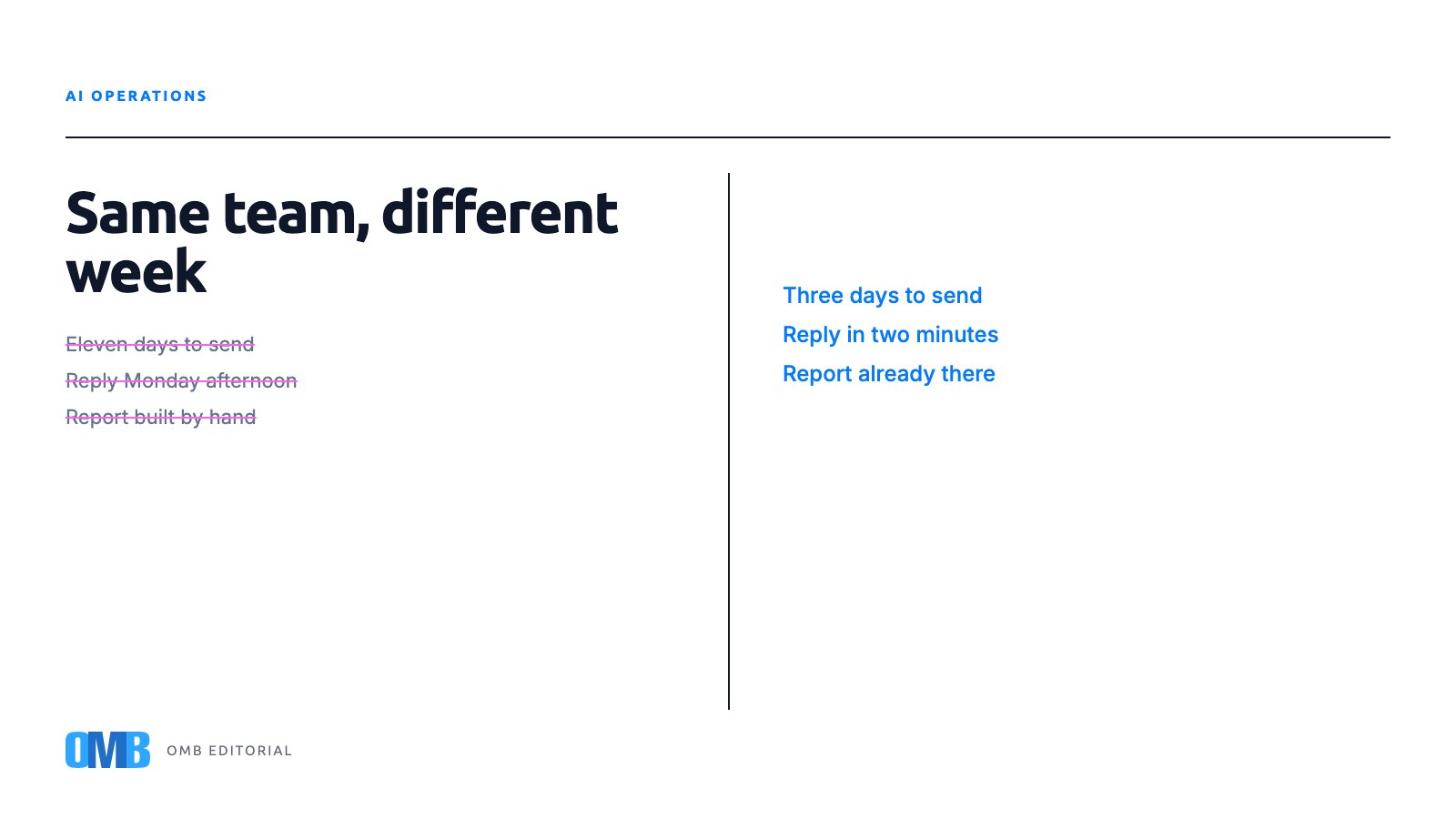
A marketing week with and without an agentic team, side by side: campaign speed, lead response, reporting and the attribution debate that finally ends.
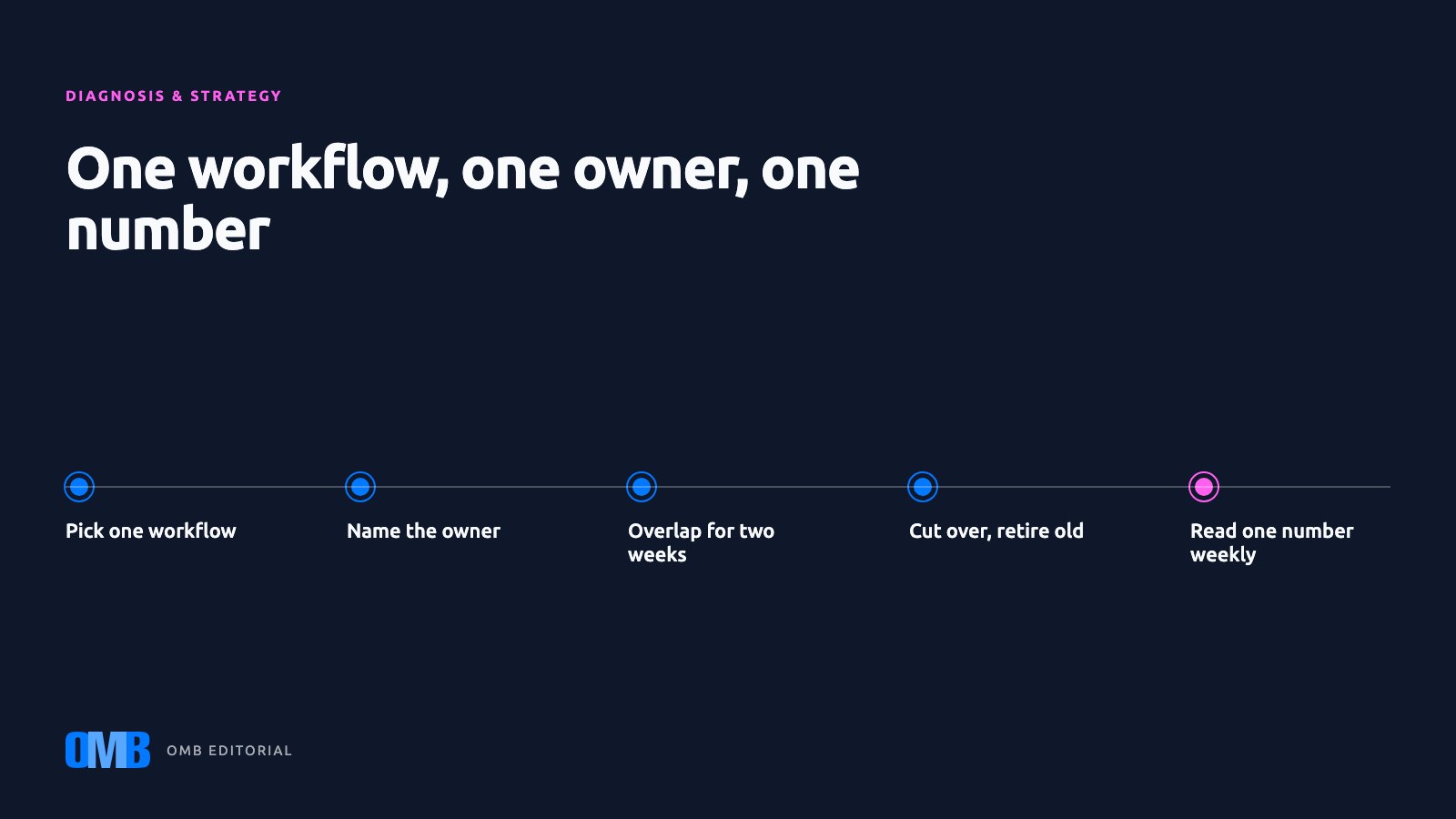
Five steps to introduce a new system to real people: one workflow, one owner, a fixed overlap, a clean cutover and a habit you read aloud weekly.
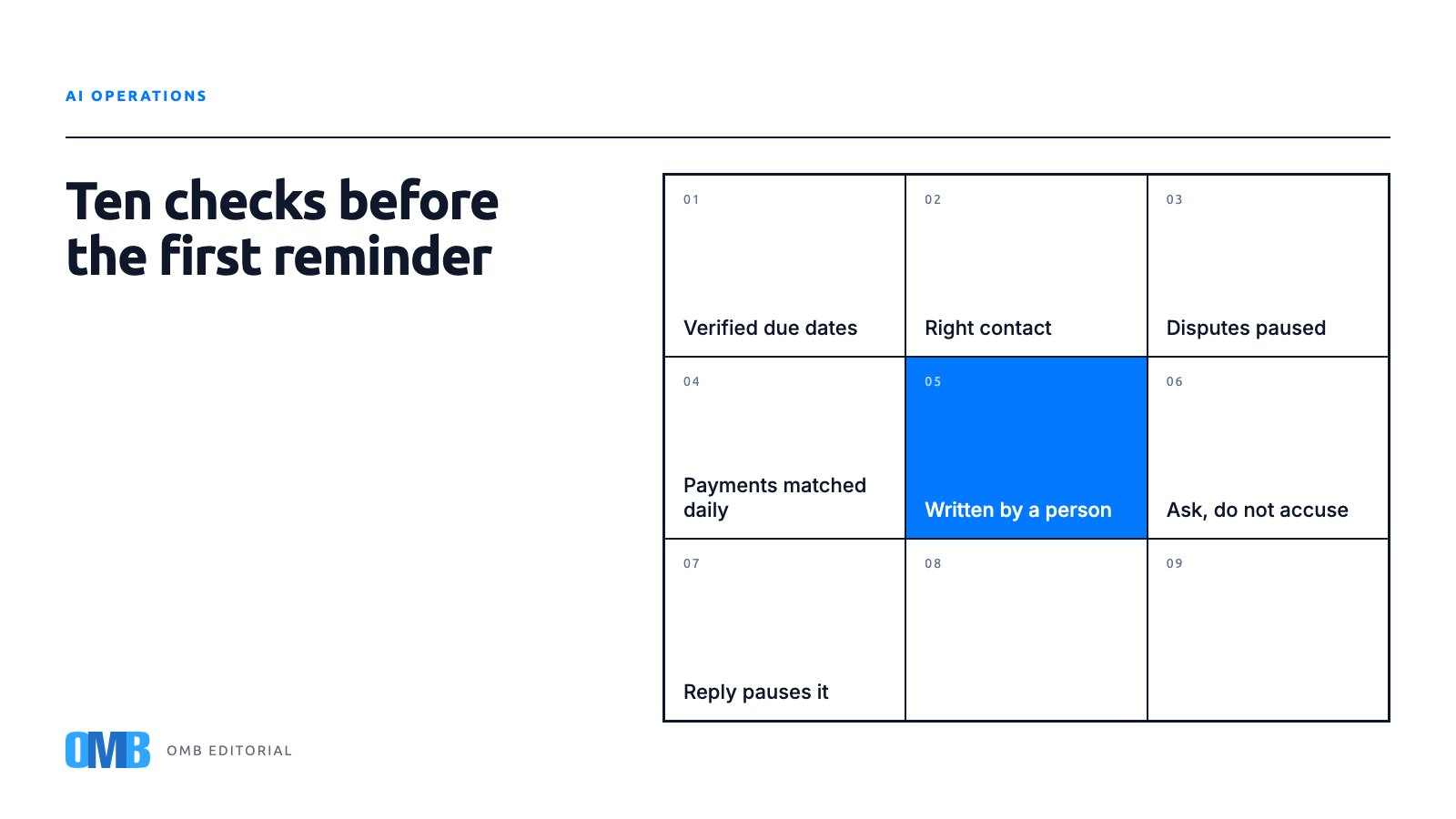
Ten checks a collections system must pass before it sends a single reminder, so that automation reads as a courteous colleague rather than a machine.
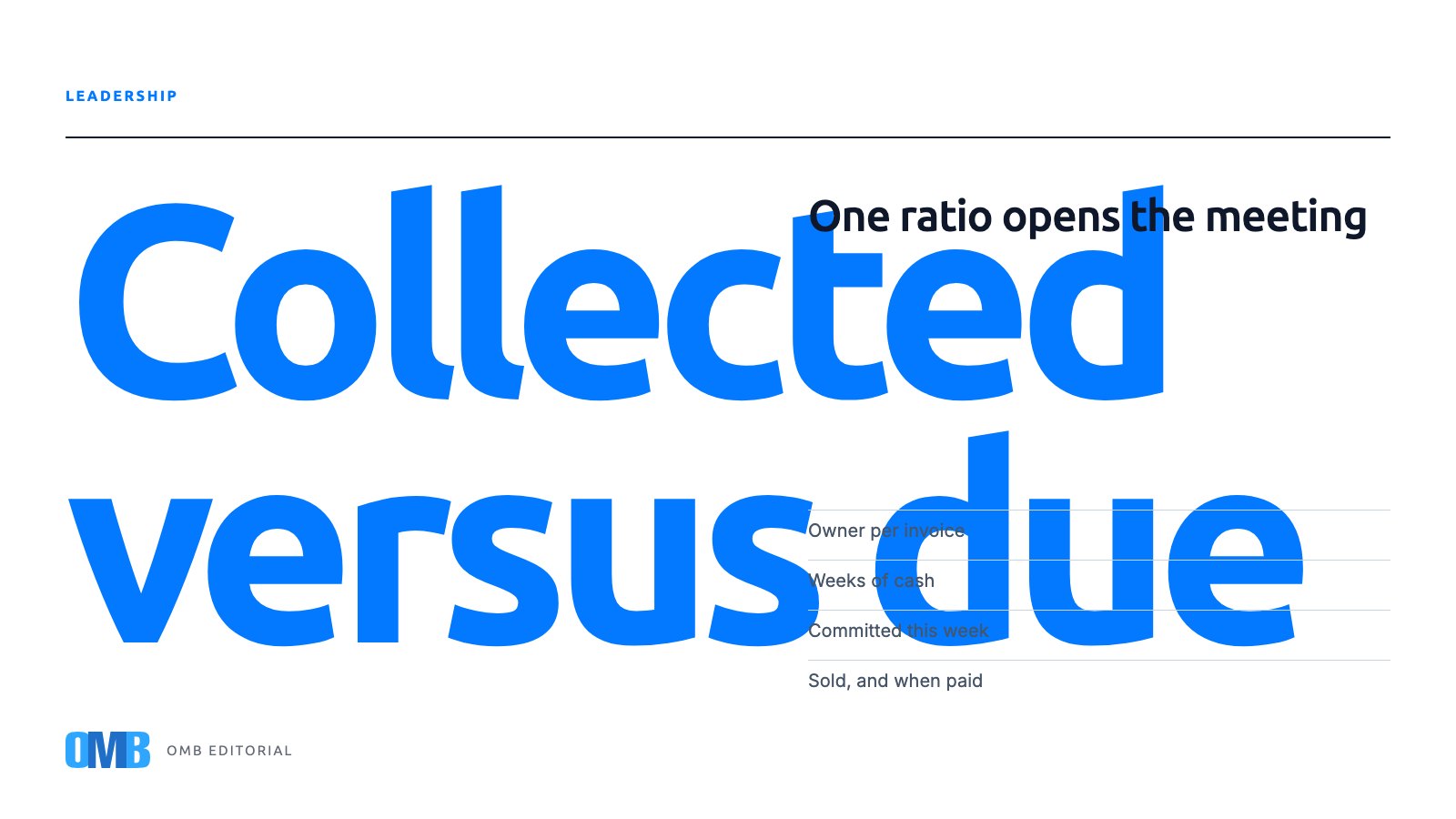
Six questions for the Monday finance conversation, and the one ratio that should open it: cash collected last week against cash that was due.
A composite consultancy billed on thirty-day terms and waited seventy. Here is what happened when follow-up stopped depending on one partner's inbox.
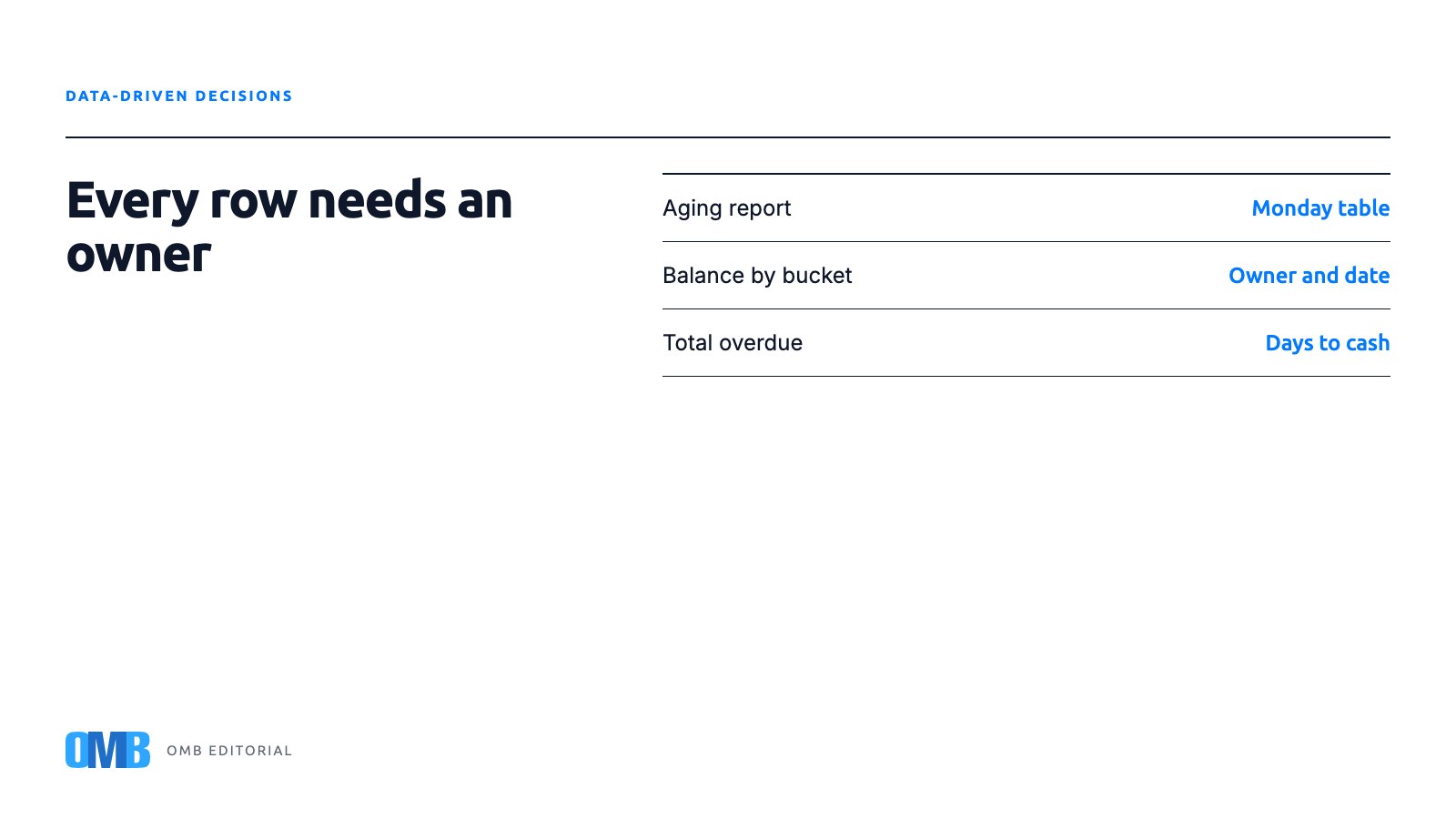
Turn the aging report into a Monday table a leader can act on, with what each bucket means, who owns the call this week, and how days to cash moves.
Four moments of a quarter close, told twice: with sales, collections and marketing in separate tools, and with the three living in one system.
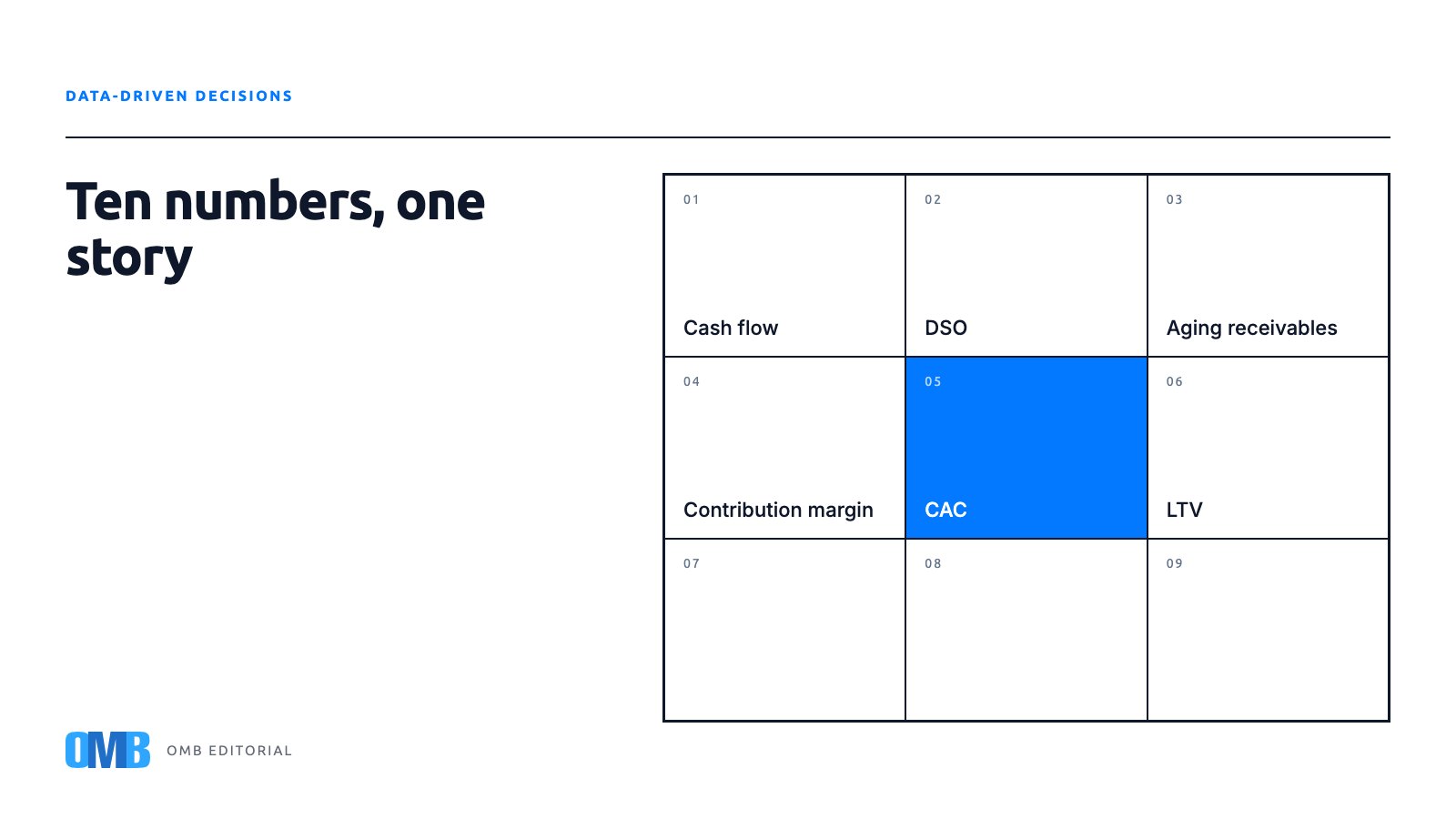
Walk into the Q1 review able to explain cash flow, DSO, contribution margin, CAC, LTV and stage conversion in your own words, and decide faster.
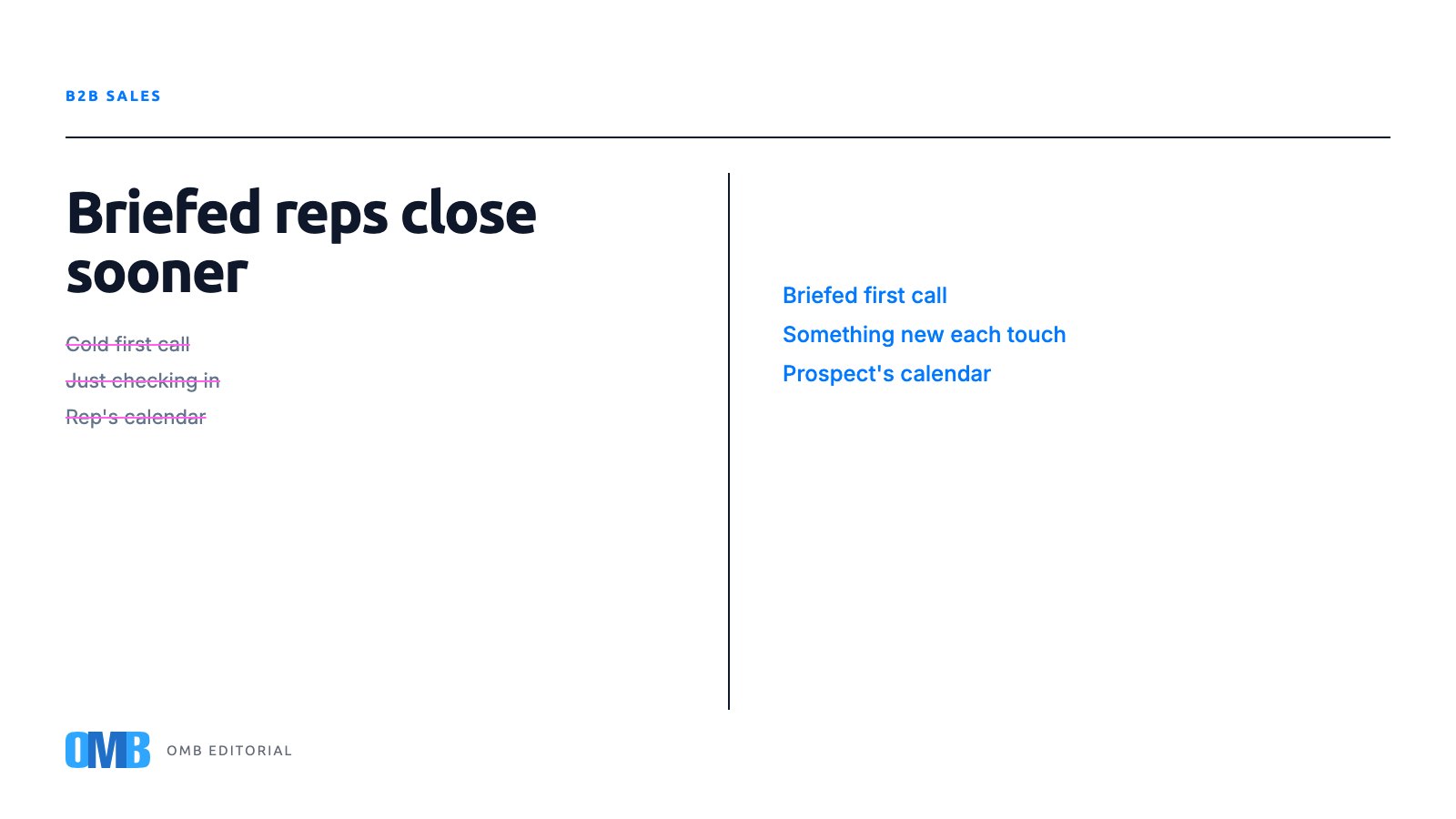
The first call decides how long a B2B deal takes. Here is why a briefed rep closes sooner, and why chasing a prospect is not the same as following up.
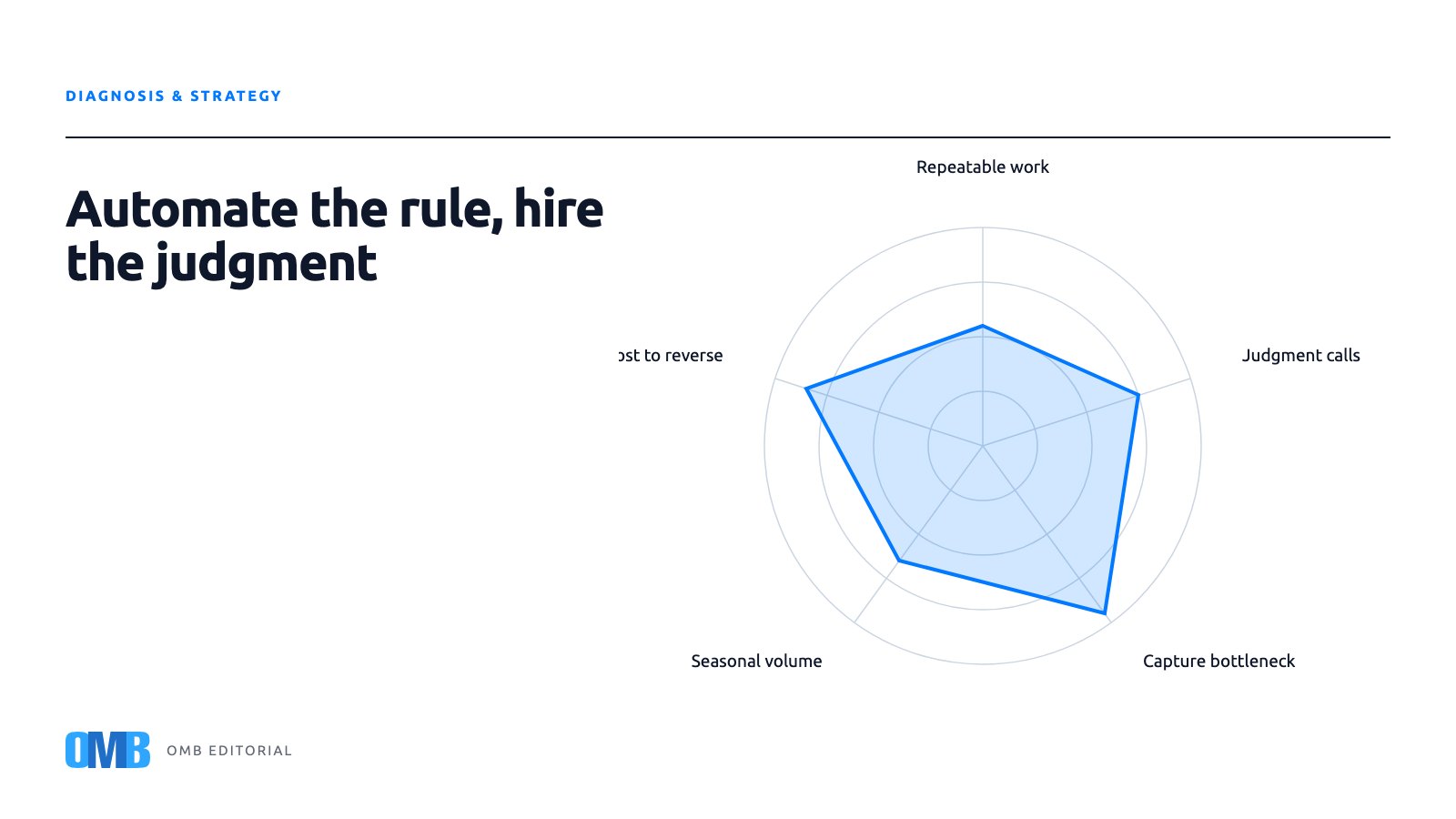
Use a decision tree by type of work to decide whether the quarter-end crunch calls for software, a new hire, or a fix in how work reaches the team.
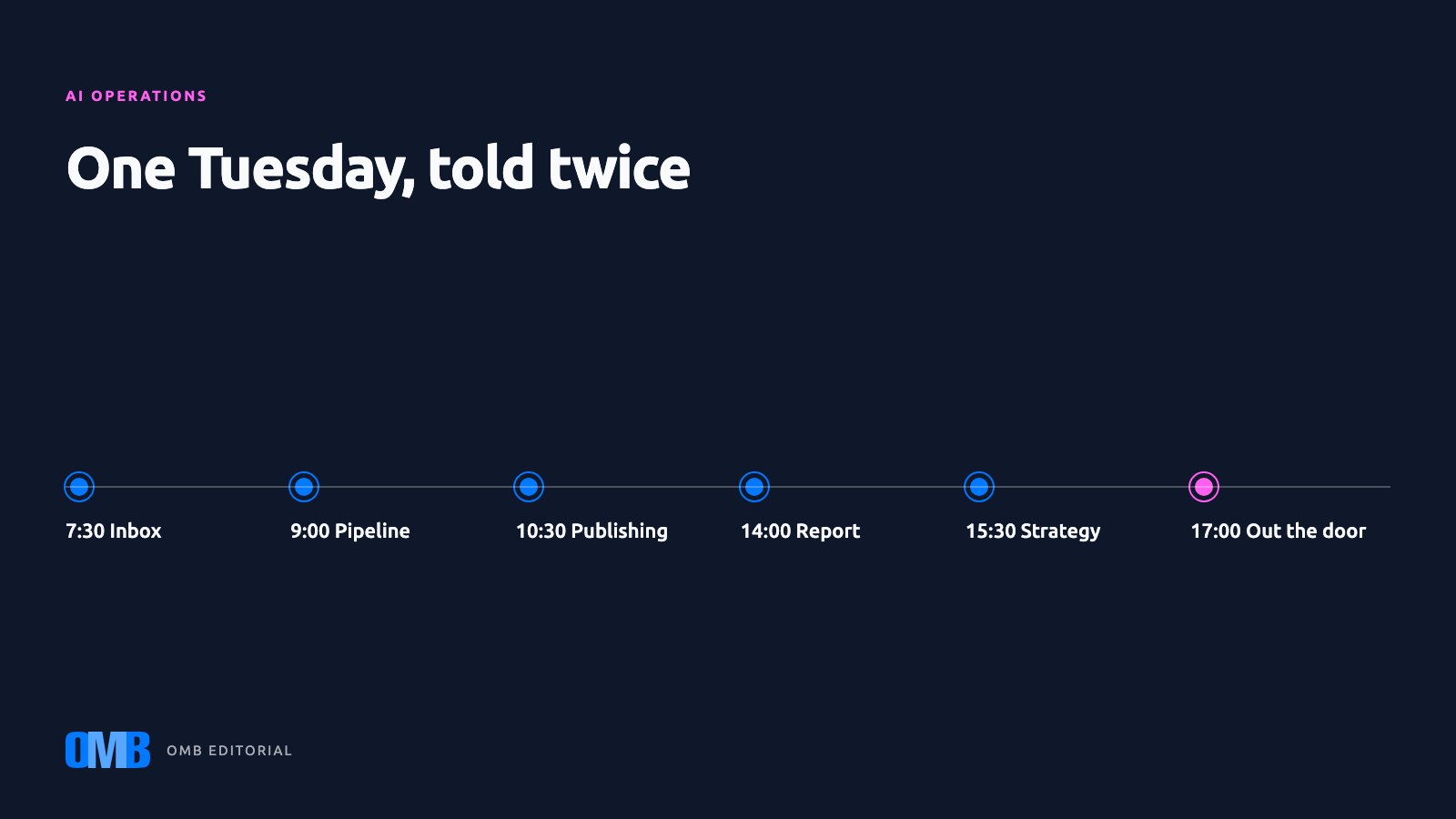
Hour by hour, what a marketing director's Tuesday looked like before AI agents ran follow-up, publishing and reporting, and what it looks like now.
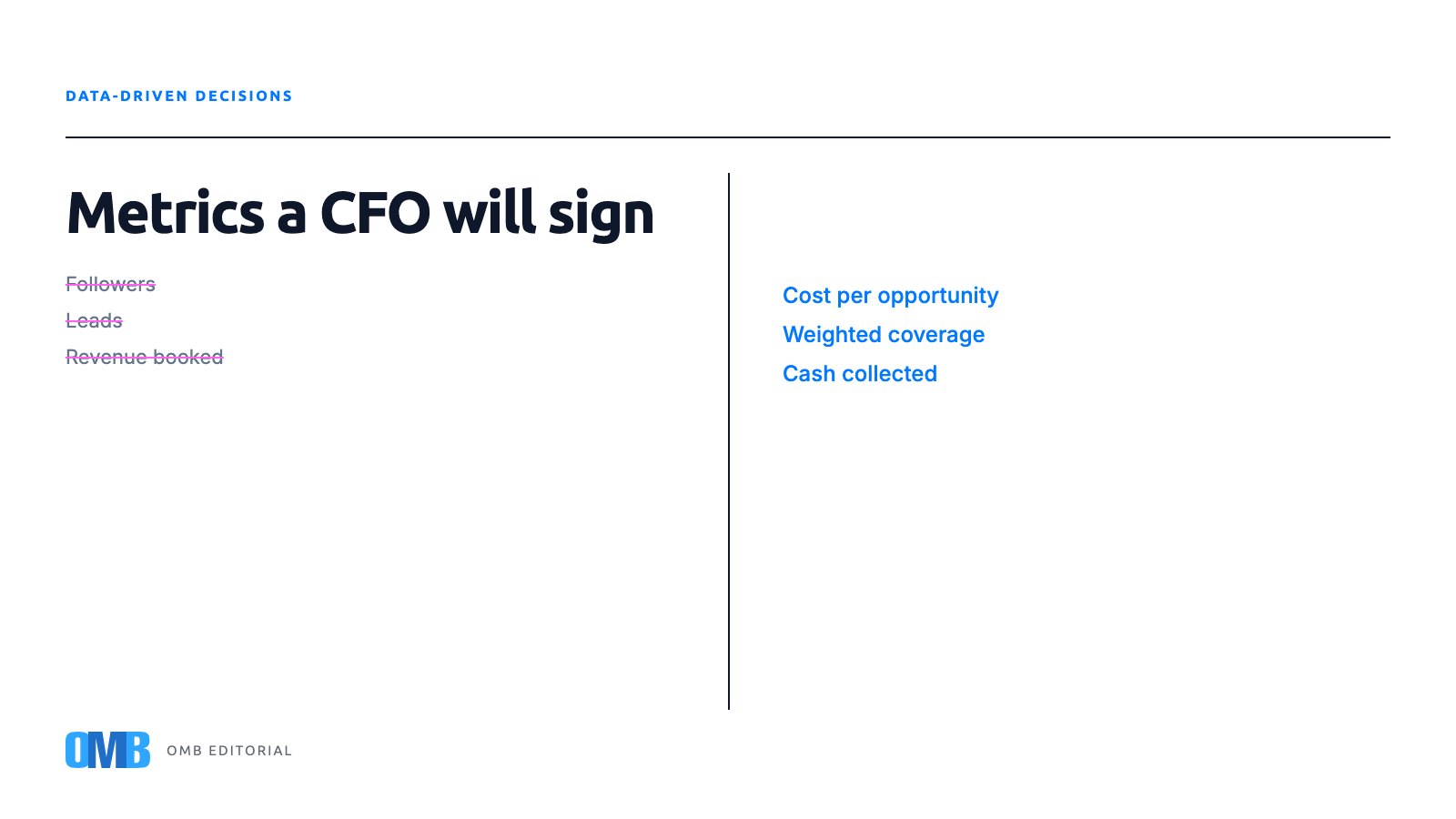
Eight pairs of numbers that separate the marketing deck from the finance meeting, and why the cash column is the one that survives a first-quarter review.
A residential HVAC company kept losing inquiries between the first message and the booked slot, until follow-up stopped depending on memory.
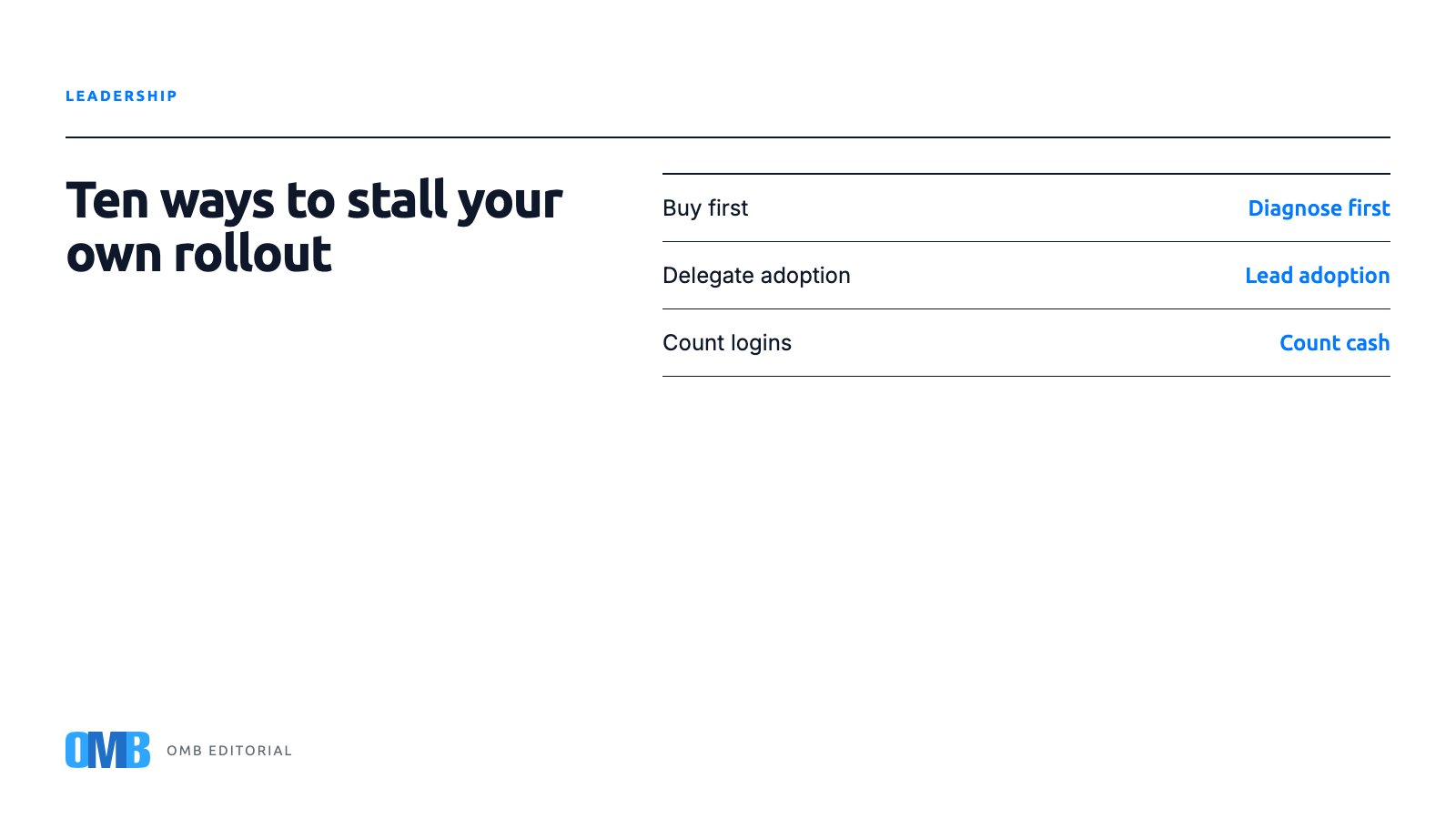
A support-desk view of the ten decisions, from buying before diagnosing to measuring activity, that quietly stall a rollout, and how to reverse each one.
Sort the opportunities that went silent in December into three kinds, then reopen the real ones with news and a question instead of another check-in.
Take apart five common objections to AI agents in operations, from replacing people to security risk, and see what they really do in a mid-sized company.
Run a five-step diagnosis that traces one order from inquiry to cash, measures the waiting and prices the delay before you approve another renewal.
Learn which five numbers belong on a CEO's January brief, how to check that each one opens into its records, and why most dashboards die by February.
A thirty minute conversation to diagnose together, no strings attached.