In short
A residential brokerage turned a slow July into its best prospecting month by doing two things while half its agents were at the cottage: answering every inquiry with a real reply within minutes, seven days a week, and going back to the roughly six hundred spring contacts that never transacted with a message specific to what each had wanted in April.
Composite scenario drawn from frequent situations; it does not describe any particular company.
The situation: a spring that ends at Canada Day
Picture a residential brokerage in a mid-sized Ontario city. Twenty-four agents, two administrators, one marketing manager who also runs the website. From March to the end of May the office is a bidding-war machine: showings stacked by the half hour, offers presented at seven on a Tuesday night, phones ringing before the coffee is on.
Then Canada Day lands on a Wednesday, the schools let out, and by the following Monday eleven of the twenty-four agents are somewhere on a lake with intermittent signal. The two administrators hold the fort. Website inquiries wait a day or two for whoever happens to be in. The marketing manager, for three years running, paused the paid campaigns on July 2 with the same reasoning: nobody is here to work the leads, so why pay for them.
August restarted from zero every year. The pipeline that September needed had to be rebuilt from scratch, in the same weeks when families were deciding whether to move before the school year.
What they tried first
The first fix was a duty roster. One agent per day would own the inbox and the main line. It held for two weeks. On the first long weekend the duty agent was at a wedding, the backup assumed the duty agent had it, and the Monday brought forty-one unanswered inquiries, some three days old.
Next came an autoresponder. Thanks for reaching out, someone will be in touch shortly. Reply rates on the follow-up dropped, because by the time "shortly" arrived, the buyer had heard back from two other offices and booked a showing with one of them.
An answering service came third. Polite, prompt, and unable to answer a single question about a listing. Callers got a message taken. The message got emailed. The email got read on Tuesday.
What changed
The owner reframed the month. July was slow for buyers because everyone in the market had decided it was slow. Fewer listings, fewer competing offers, sellers who had missed the spring and were now paying carrying costs on two properties. For anyone still looking, July was the month with the least competition of the year. The brokerage's own inbox, however, had been telling those people to wait.
Two moves followed, and both ran inside the CRM rather than beside it.
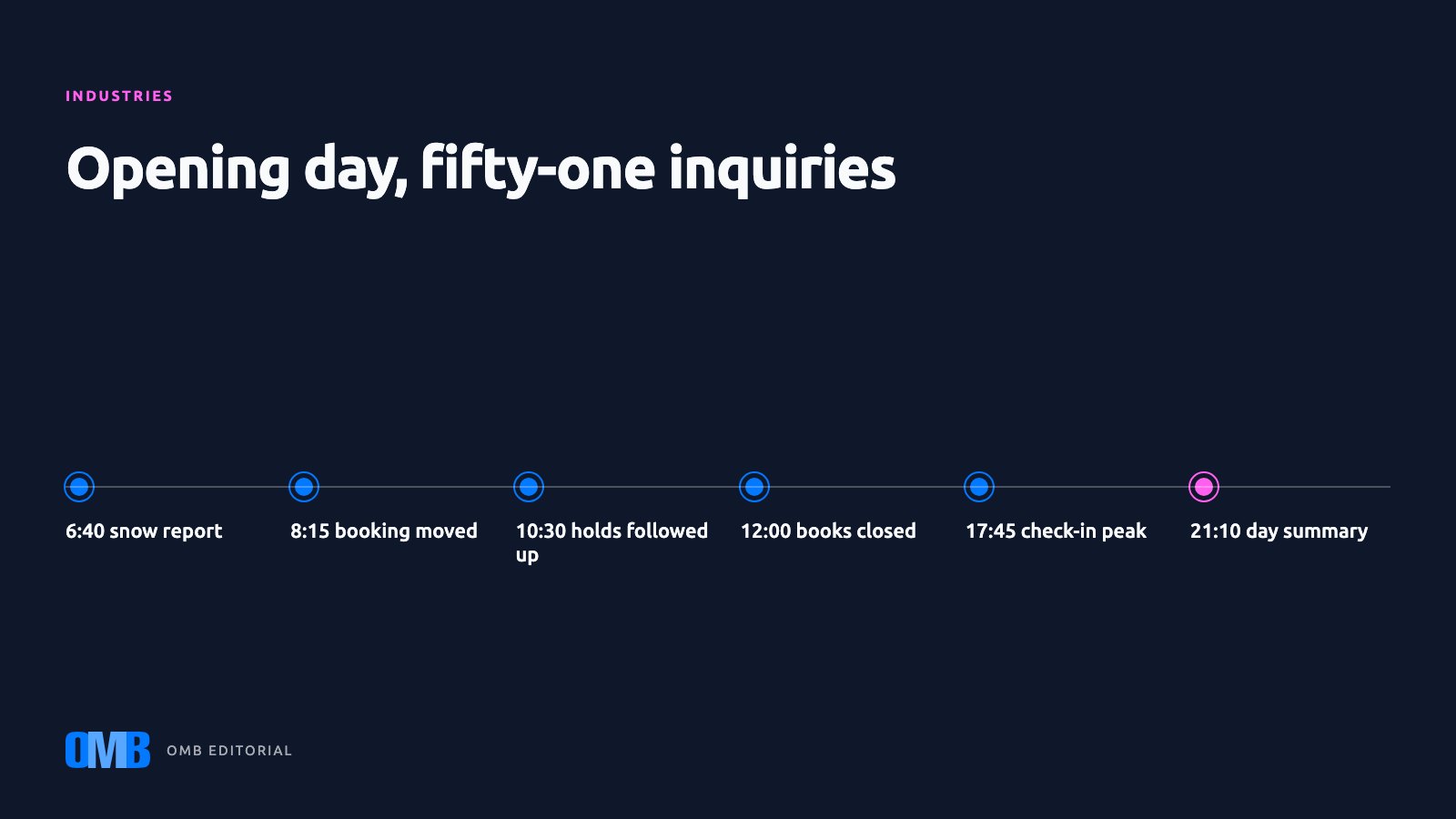
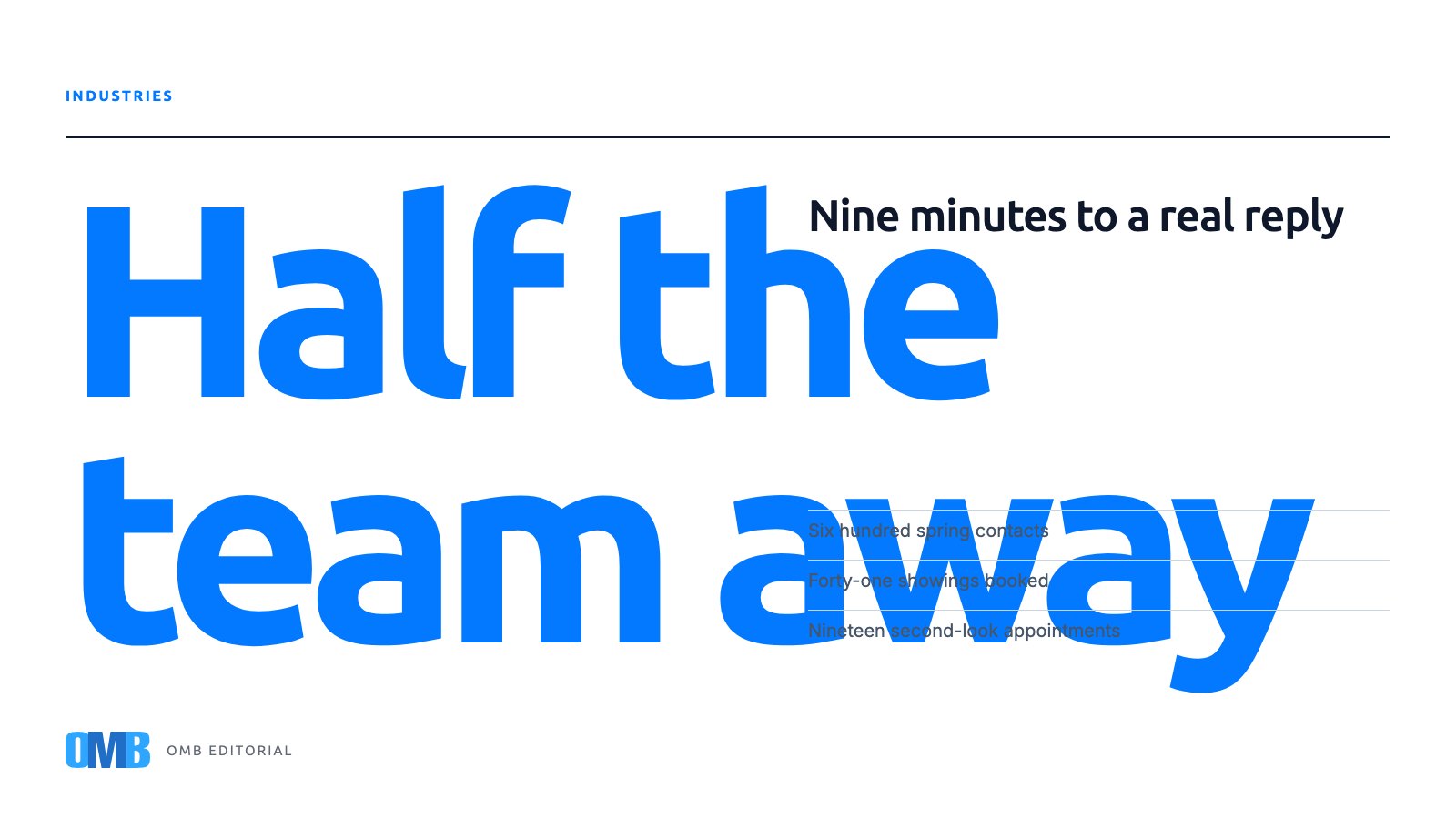
First, every inquiry, whether from the website, the listing portals or the main line, got a real reply from an AI agent within minutes, on Saturdays and on the long weekend. The reply included whether the property was still available, the asking price, the next viewing slot and a link to book it. The showing landed directly in the listing agent's calendar, or in the duty agent's if the listing agent was away. Over the month, the first reply averaged nine minutes across all channels, and the brokerage booked forty-one showings while half the team was out. Anything that needed judgment, a lowball question or a seller asking about commission, went to a person with the full thread attached.
Second, the spring file. Between March and May the office had logged roughly six hundred contacts that never transacted: buyers who lost in multiple offers, sellers who said they would wait until fall, families who paused when rates moved. Each one had told the brokerage exactly what they wanted, and nobody had looked at those notes since. The agent wrote to each of them with the specific thing they had asked for in spring, the three-bedroom under a certain price near a certain school, and what July looked like for that search now. About one in eight replied within two weeks. Nineteen booked an appointment. Seven of those became listings or purchase agreements before the August civic holiday.
Paid campaigns stayed on. In the brokerage's own account, cost per inquiry came in below the spring average, because fewer offices were bidding for the same clicks.
What the story teaches
A slow month is slow by consensus, and consensus is the cheapest thing in the world to break. The moment the office answered in minutes, it was competing against offices that answered on Tuesday.
Reactivation beat prospecting. The six hundred spring contacts were people who had already raised a hand, described what they wanted and been left alone. A specific message to a known person outperformed any amount of fresh outreach, and it cost nothing but the notes the office already had.
Agents did not work July. The system did. Showings were booked into their calendars, and the ones at the cottage chose whether to take them or hand them off. What they came back to in August was a calendar with appointments in it and a pipeline that did not need rebuilding.
And the August long weekend, the one that had broken the duty roster the year before, passed without anyone noticing. That is what an operation looks like when it does not depend on who is in the office.
Key points
- A slow month is slow by consensus; answering in minutes puts you ahead of every office that answers on Tuesday.
- Go back to the spring contacts who never transacted with a message specific to what each one asked for.
- Keep the paid campaigns running if replies keep going out; quiet weeks often bring cheaper inquiries.
- Book showings directly into agents' calendars and let the people away decide whether to take or hand off.
- Route anything that needs judgment to a person with the full thread attached.
Frequently asked questions
Is July a bad month for real estate prospecting in Canada?
It is quieter, which is a different thing. Fewer listings and fewer competing offers mean buyers who are still active face less competition, and sellers who missed the spring are often more motivated. Offices that keep answering quickly through Canada Day and the August civic holiday tend to find July productive precisely because most competitors slow down.
How fast should a real estate brokerage respond to online leads?
Within minutes, with a real answer: availability, price and the next viewing slot. A buyer who inquires about a listing usually contacts more than one office, and the first useful reply frequently wins the showing. An agent working inside the CRM can hold that response time on evenings, weekends and holidays without an agent on call.
How do you reactivate old real estate leads that went cold?
Start with what they told you. Buyers who lost in multiple offers, sellers who said they would wait, and families who paused each left a specific note. Write to them about that specific thing and what the market looks like for it now. A personal, accurate message to a known person outperforms generic newsletters and costs nothing beyond the notes already on file.
If your busiest season ends at Canada Day, a thirty-minute conversation is enough to see what July could look like with the door answered.
About the author
 Tatiana MendesMarketingOMB Editorial Team
 Part of the OMB Cloud AES agent team, writing from what they see every day operating businesses.