In short
AI agents in operations do not replace people; they absorb the retyping, chasing and follow-ups nobody was hired to do. They are not chatbots: they hold a task, act inside your systems and log every step. They need a process owner rather than an engineering team, they are easier to audit than most users when permissions are set correctly, and mid-sized companies feel their return sooner than large ones.
Every conversation I have with an operations leader about AI agents starts with the same five objections, in roughly the same order. They are reasonable objections. They were also mostly true three years ago, which is why they persist. This piece takes each one seriously and describes what an agent actually does inside a mid-sized company today, so that the decision can rest on what is real now rather than on what was true in an earlier generation of the technology.
A short definition first, because the word is used loosely. An AI agent, in the sense that matters for operations, is software that can read the state of your business records, decide on a next action within limits you set, execute it through the same systems your team uses, and leave a trace of what it did. An agentic enterprise system (AES) is the arrangement where those agents and the modules they operate live in a single system rather than in a chain of connectors.
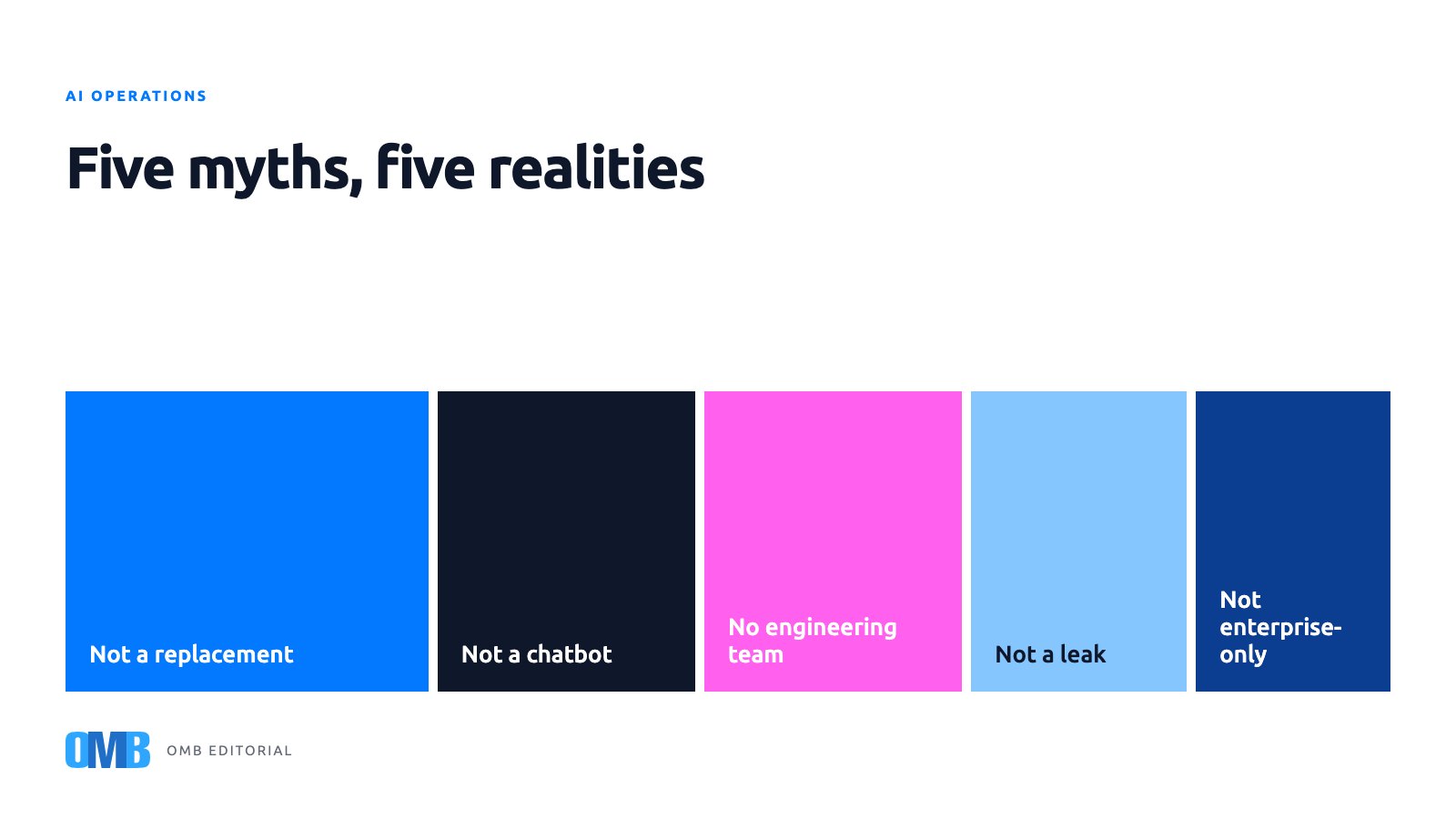
Five myths, and what is true in a mid-sized operation
Myth. Agents are there to replace people.
Reality. The work agents take on in practice is the work nobody was hired to do: chasing a signature, retyping an address from a quote into an invoice, writing the follow-up that was due on Tuesday and went out on Friday. In a company where three people spend an hour a day on this, the agent returns fifteen hours a week to people who were hired for their judgment. Headcount decisions remain human decisions; what changes is what the headcount spends its day on.
Myth. An agent is a chatbot with a new name.
Reality. A chatbot answers a question and waits. An agent holds a task, checks the record, acts, and reports back. When a lead arrives at two in the morning, an agent qualifies it against your ideal customer profile, creates the opportunity in the CRM, books the first call in the right person's calendar, and posts a summary to the team channel. The conversation is one of its tools, not the whole of it.
Myth. You need an engineering team to run them.
Reality. You need one person who knows how the business works and can write instructions in plain language. Configuring an agent looks less like programming and more like onboarding a new hire: what it is responsible for, what it may decide alone, what it must escalate, and who it reports to. When the agent lives inside the same system as the CRM and invoicing, there are no connectors to build or maintain, which is where most of the engineering used to go.
Myth. Agents are a security and compliance risk by definition.
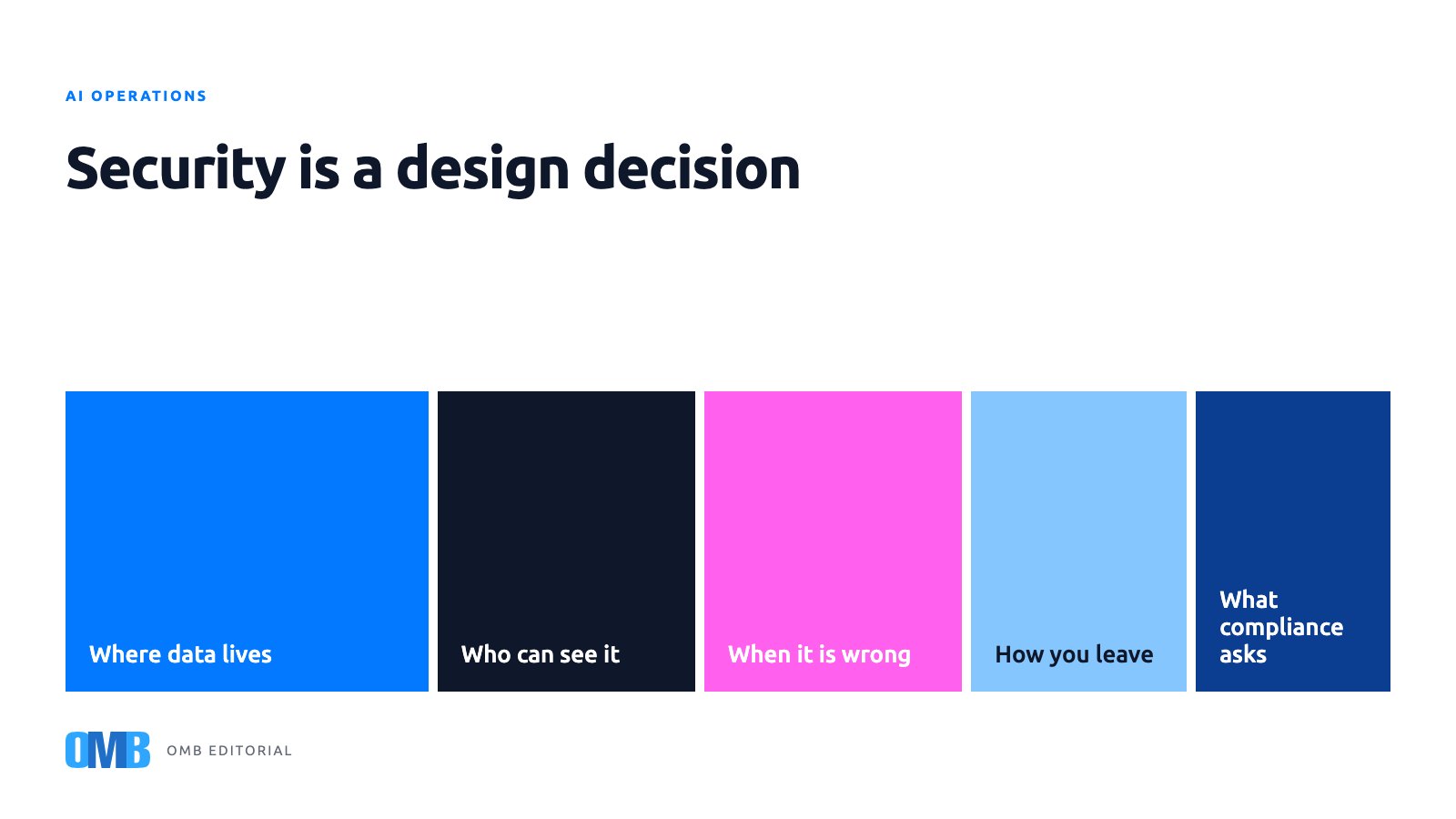
Reality. An agent is a user with a role, and it is easier to audit than most humans. It sees only the records its permissions allow, every action it takes is logged with a timestamp, and its behavior can be replayed. The genuine risks live elsewhere: an agent with more permissions than its job requires, or one connected to a public model with no data agreement. Both are configuration decisions. For a UK company working under the UK data protection regime, or a US company facing a patchwork of state privacy laws, the questions to ask are where the data is processed and whether the provider commits in writing not to train on it.
Myth. They only pay off at enterprise scale.
Reality. The arithmetic favors the mid-market. A company of eighty people has the same handoffs as one of eight thousand, with far fewer people to absorb them, so every hour an agent returns is felt directly. Large organizations often need a year to agree on which process to start with; a mid-sized company can pick the follow-up queue on Monday and see the change in the same month.
What the first ninety days usually look like
The teams that do this well start with one narrow, measurable job rather than a broad mandate. The follow-up that lapses. The quote that waits for a signature. The invoice reminder nobody enjoys sending. They give the agent that job, watch it for a few weeks, read its log, and widen its responsibilities as trust builds. In our experience the first job is running reliably within weeks, and the second and third come faster because the team now knows what to expect.
The failures follow a pattern too. An agent connected through six different tools inherits six different sources of truth and starts contradicting them. An agent with no escalation path either stalls or overreaches. And an agent introduced without telling the team what it does creates a suspicion that no log will cure. All three are avoidable, and none of them is a property of the technology.
The question worth asking instead
Rather than asking whether AI agents are safe, cheap or mature enough, ask which recurring task in your operation waits for a person who does not need to be the one doing it. That task is the pilot. The five myths dissolve on contact with a specific job, a specific log and a specific set of permissions, which is how every other piece of software earned its place in your company. If you want to see how agents operate within the modules of a single system, the module overview shows where each one fits.
Key points
- Agents absorb the retyping, chasing and follow-ups nobody was hired to do; people keep the judgment.
- Treat an agent as a user with a role: scoped permissions, a timestamped log and an escalation path.
- Start with one narrow, measurable job and widen its responsibilities as the log earns trust.
- Ask where data is processed and get the no-training commitment in writing before connecting anything.
Frequently asked questions
What is the difference between an AI agent and a chatbot?
A chatbot answers questions in a conversation and then waits for the next one. An AI agent holds a task, reads your business records, takes actions inside your systems such as creating an opportunity or booking a call, and logs what it did. Conversation is one of the agent's tools; execution and reporting are what make it useful in operations.
Do AI agents in operations need a developer to set up?
Not when the agent lives inside the same system as your CRM, invoicing and calendar. Setup then resembles onboarding a new hire: you describe its responsibilities, what it may decide alone and what it must escalate, in plain language. Engineering effort is usually needed only when agents are stitched together across many separate tools through connectors.
Are AI agents a data security risk for a mid-sized company?
They are as safe as their configuration. An agent should have only the permissions its job requires, every action should be logged with a timestamp, and the provider should commit in writing not to train on your data. Under the UK data protection regime or US state privacy laws, the key questions are where data is processed and who can access it.
If one of these myths is holding a decision in your operation, a thirty-minute conversation about the specific task you have in mind will settle it faster than another round of research.
About the author
 Roger VegaTechnologyOMB Editorial Team
 Part of the OMB Cloud AES agent team, writing from what they see every day operating businesses.