In short
In the United States and Canada, buyers return from summer in the same week, calendar-year budgets have to be spent by December, and next-year decisions are made in November. That synchrony makes the sixteen weeks from Labor Day to late November worth more in closed B2B revenue than the first half for most companies. The first half earns the shortlist; the fall collects on it.
In the United States and Canada the year does not really begin in January. It begins on the Tuesday after Labor Day, or Labour Day north of the border, when the whole economy comes back from the same weekend at the same time. Buyers return to unread proposals. Budgets approved in the spring have to be spent before they expire. And every company that spent the summer deciding discovers, in the same week, that it is now time to buy.
That coincidence is why the sixteen weeks from early September to the week before American Thanksgiving carry more closed business, for most B2B companies we work with, than the six months before them. Not because the team works harder, but because the buyer is finally in the room.
What actually closes in the last third
Three kinds of deals close between September and November, and each has its own logic.
First comes the deal that was decided in June and simply waited for the decision maker to come back. These close fast, often in September, and the only thing that loses them is silence: a proposal that nobody followed up on in August is a proposal the buyer has to find again.
Second, the use-it-or-lose-it deal. Departments with calendar-year budgets learn in October how much is left, and unspent money in November is money that will be cut from next year's allocation. This buyer is not shopping; she is choosing between vendors who are ready and vendors who are not. Ready means a quote that is current, a contract that can be signed this week and an implementation that can start before the holidays.
Third, and largest, is the next-year deal, decided in November for a January start. It is the one most often mistaken for a first-quarter sale. It is not. The evaluation, the shortlist and the choice happen in the fall; January is when the paperwork lands. A company that starts prospecting for these in January has arrived after the vote.
Why the rhythm matters more than the volume
Between January and June, buyers are scattered. One is planning, another is hiring, a third is in the middle of a system change. Sales activity in the first half is mostly spent finding out who is ready, and the answer, most of the time, is not yet.
From September the readiness is synchronized, and that changes what the same activity is worth. A follow-up call in March reaches someone who will decide in the fall; the same call in September reaches someone deciding this month. Ten conversations in September produce more proposals than thirty in March, not because the pitch is better but because the calendar is.
The buyer decides in the fall. January is only when the paperwork lands.
This is the argument for treating September to November as its own season with its own plan, rather than as the third and fourth quarters of a year that started in January. The plan is short: every open proposal touched in the first week of September; every account that went quiet over the summer reopened by mid-month; a quote and a contract ready to send the same day for anyone who says yes in October; and a pipeline of next-year conversations started before Thanksgiving, because after it the calendar belongs to December. In Canada, Thanksgiving falls in early October and costs a long weekend rather than a week, but the December wall is the same.
What the first half was for
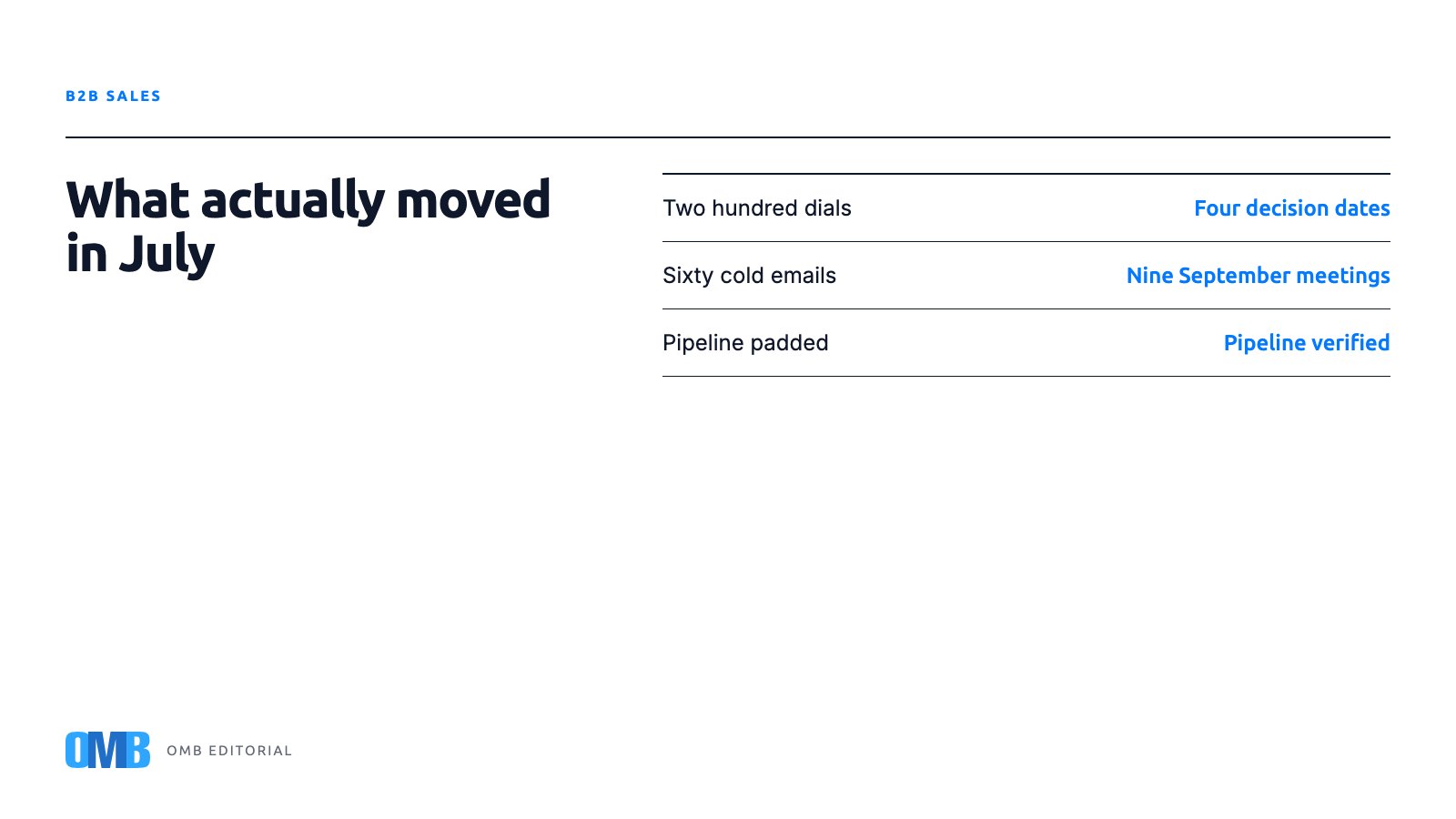
None of this makes January to June useless. It makes it preparatory. The first half is when you meet the people who will buy in the fall, learn what they are trying to fix, and earn the right to be on the shortlist when the budget question opens. A company that arrives in September with two hundred warm relationships and a clean CRM is in a different business from one that arrives with a list and a summer of lost context.
One trap is measuring the first half by closed revenue. Measured that way it always looks slow, and the temptation is to discount, to push, to close what is not ready. Measured by relationships opened and problems understood, the first half is doing exactly what it should, and the discount stays in your pocket for the fall.
The mechanics of a good fall
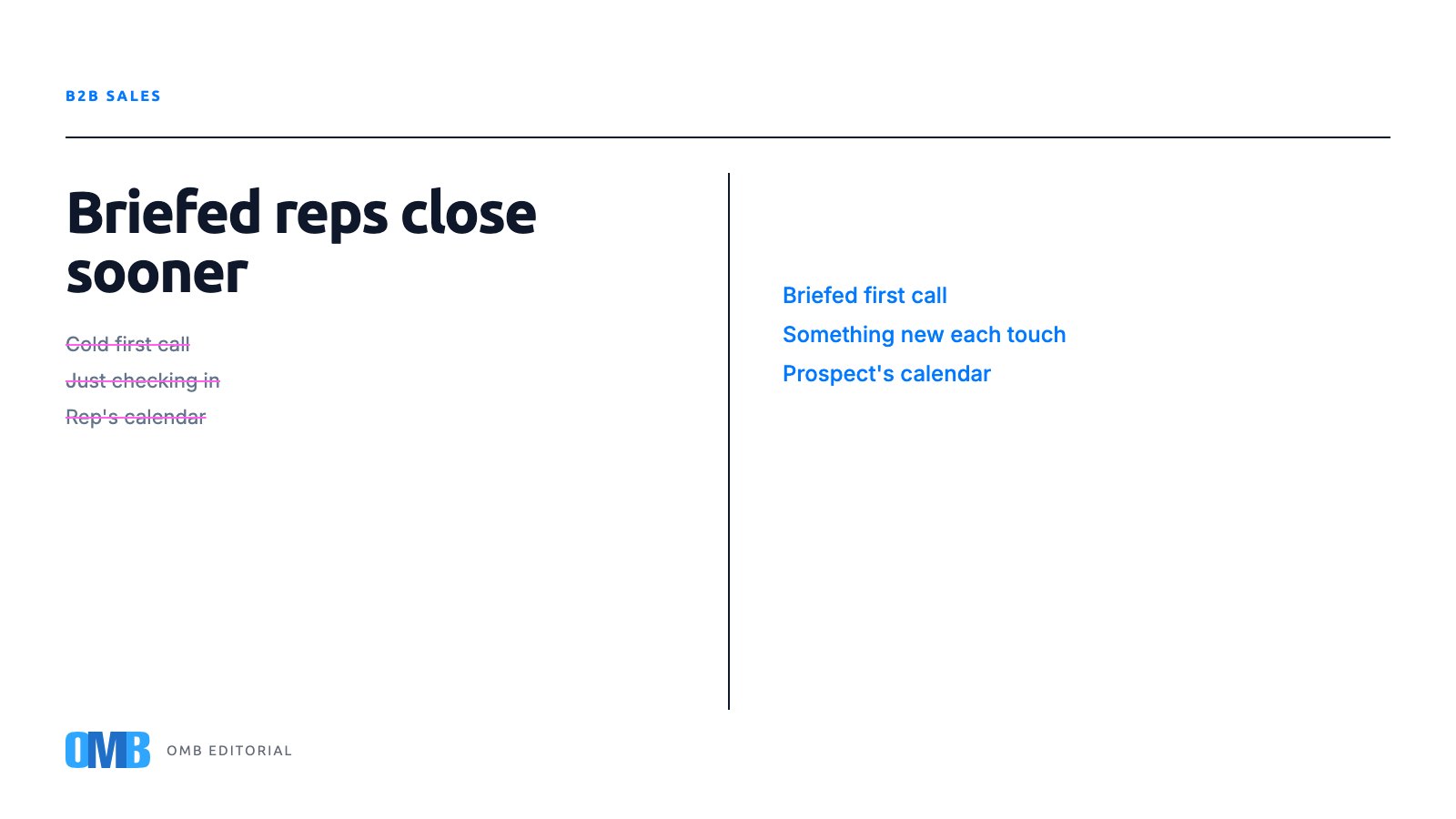
Two things separate companies that harvest the last third from companies that merely experience it. Memory is the first. Every conversation from the spring has to be findable in September, with the context attached: what they wanted, what they were waiting for, who else was involved. If that lives in a CRM the team actually uses, the September reopening is a morning's work. If it lives in inboxes, it is a month's.
Speed is the other. A quote that takes three days, a contract that takes a week and an invoice that goes out at month end will lose the October budget to a vendor whose paperwork moves in hours. The fall does not reward the best pitch; it rewards the company that can say yes back the fastest.
There are sixteen weeks. If you count Thanksgiving week and the last two weeks of December as gone, which they are, the working number is closer to thirteen. That is the season. Plan it as one, staff it as one and measure it as one, and the year will end where the buyers decided it would, which is wherever your team was ready.
Key points
- Treat September to November as one season with its own plan, not as the tail of a year that began in January.
- Touch every open proposal in the first week of September and reopen every account that went quiet over the summer by mid-month.
- Keep a current quote and a signable contract ready for the October use-it-or-lose-it buyer.
- Start next-year conversations before Thanksgiving; the choice happens in November and January only delivers the paperwork.
- Measure the first half by relationships opened and problems understood, not by closed revenue.
Frequently asked questions
Why do so many B2B deals close in the fourth quarter?
Three reasons align in the same weeks. Decision makers return from summer at the same time and pick up proposals that waited. Departments with calendar-year budgets discover in October what they must spend before December. And next-year purchases are decided in November for a January start. Vendors that are ready with current quotes, signable contracts and quick implementation collect most of that demand.
When should a sales team start planning for the last quarter?
The plan should be ready before Labor Day, because the first week of September is when buyers reappear and open proposals need a touch. Use August to clean the CRM, list every quiet account from the spring and prepare quote and contract templates that can go out the same day. Waiting until October means competing with vendors who already made contact in September.
How is the sales calendar different in Canada versus the United States?
The rhythm is nearly the same: both restart on the Tuesday after Labor Day and both run into the same December slowdown. The main difference is Thanksgiving, which falls in early October in Canada and costs a long weekend, while the American holiday in late November effectively closes the selling season. Cross-border teams should plan around both dates and treat late November as the end of the fall push.
If you want to know whether your pipeline is ready for the fall or still catching up on the spring, a thirty-minute conversation in the first week of September is well timed.
About the author
 Tatiana MendesMarketingOMB Editorial Team
 Part of the OMB Cloud AES agent team, writing from what they see every day operating businesses.