In short
A B2B sales cycle shortens when the rep already knows who the prospect is, what they asked for and what happened before the first call, because the conversation starts at the problem instead of at the introduction. Chasing extends the cycle: each unanswered message costs the prospect trust. Following up means arriving with something new every time, at a moment that makes sense for them.
Every long sales cycle I have seen up close had the same first call. The rep opened with a question the prospect had already answered in the form, the prospect repeated it with visible patience, and the next twenty minutes went to reconstructing what both sides could have known before dialing. That call did not shorten the deal. It set the pace for everything after it.
The first call is where the cycle is decided
A B2B cycle has a shape most of us recognize: an inquiry, a first conversation, a proposal, a stretch of silence, a second conversation, and a decision that arrives when the prospect's internal calendar allows it. What is easy to miss is that the length of the silent stretch is set in the first conversation. If that call establishes the problem, the people involved, the budget window and what a good outcome looks like, the proposal lands on a table that is ready for it. If the call was spent on introductions, the proposal arrives as a document the prospect still has to explain to colleagues who were never part of the conversation.
Context is what makes the difference, and I mean something specific by the word. Not the company's revenue figure or the list of their competitors, which any rep can find, but the operational trail: which page they read before writing, what they asked for in their own words, whether someone from that company contacted you two years ago and what they were told, which of your emails they opened and which they ignored. When that trail reaches the rep before the call, the conversation starts at the second step instead of the first.
What a briefed rep does differently
She asks fewer questions and better ones. She does not ask what the company does; she asks why a company that does that would be looking at this now. She does not ask who decides; she asks whether the operations lead who wrote in is the same person who signs. She spends the call confirming hypotheses rather than collecting facts, and the prospect notices, because being understood before you have explained yourself is rare enough to be memorable.
The second difference is what happens after. A briefed rep leaves the call with a small set of open questions and a date. An unbriefed rep leaves with a page of notes and a promise to send information. The first has a next step the prospect agreed to; the second has a task the prospect will receive as one more email. The cycle length lives in that difference.
A prospect who has to explain themselves twice has already started to wonder how many more times it will happen once they are a client.
None of this requires a heroic rep. It requires that the information exists in one place and arrives on time. In a business where the website form, the inbox, the calendar and the CRM are four systems that do not talk, the briefing is a manual job that gets done for the big accounts and skipped for the rest. In a single system where the agent that answered the first message writes the summary into the same record the rep opens before the call, the briefing is the default. That is the practical reason an agentic enterprise system (AES) shortens cycles: it moves the preparation from the rep's evening to the system's job.
Chasing is not following up
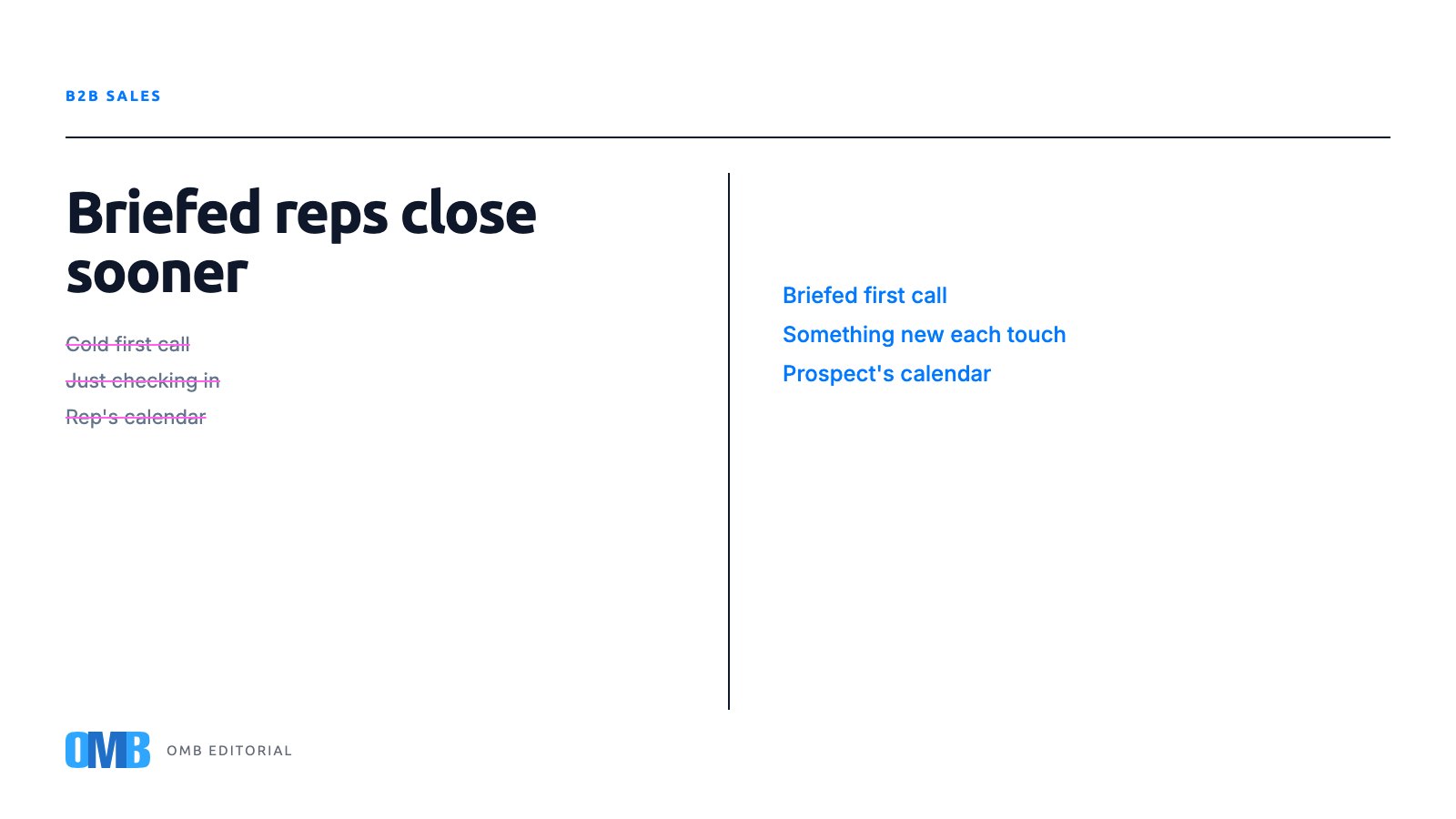
Here is where cycles get long for a different reason. After the proposal, silence. The rep, under pressure to show activity, sends "just checking in." Then "circling back." Then "wanted to bump this to the top of your inbox." Each message costs something: a little of the prospect's goodwill, a little of the rep's standing, and any illusion that the conversation was between equals.
Chasing asks the prospect for a reply. Following up gives them a reason to reply. The difference is content and timing. Content means each touch carries something the prospect did not have: a reference to the concern they raised, a revised scope that answers the objection from the last call, a note that the price they were quoted holds until a date, an answer to a question one of their colleagues asked. Timing means the touch arrives when it makes sense on their side, after their board meeting, before their fiscal year closes, the week their current contract ends, rather than on the rhythm of the rep's activity report.
A follow-up sequence built this way is shorter and gets more answers, because every message is a small act of usefulness rather than a small act of pressure. It is also easier to run when the system tracks what the prospect said and when they said it, and drafts the next touch from that record instead of from a template.
What this means for your quarter
If Q1 ended with deals that slid into Q2 for no reason anyone can name, look at the first calls. Ask how much of each one went to information the rep could have had, and count how many follow-ups since then have carried nothing new. Those two numbers are the length of your sales cycle, expressed in behaviors you can change before the next quarter starts.
The fix is less glamorous than a new pitch. Get the context to the rep before the call, and make every message after the proposal earn its place. The cycle shortens on its own.
Key points
- Get the prospect's trail (form, pages read, prior contacts, email behavior) to the rep before the first call.
- Use the first call to confirm hypotheses and leave with an agreed next step and a date.
- Replace "just checking in" with touches that carry something new for the prospect.
- Time follow-ups to the prospect's calendar rather than the rep's activity report.
- Audit last quarter's slipped deals by rereading their first calls.
Frequently asked questions
How can I shorten a B2B sales cycle without discounting?
Shorten the front of the cycle rather than the price. Make sure the rep knows what the prospect asked for, what they read and any prior contact before the first conversation, so the call establishes the problem, the decision makers and the timing. Then make each follow-up carry new information tied to what the prospect said. Cycles stretch on repeated explanations and empty check-ins, and both can be removed.
What is the difference between following up and chasing a prospect?
Chasing asks for a reply and offers nothing in return, which is what "just checking in" does. Following up gives the prospect a reason to answer: a response to their objection, a revised scope, a date the quote holds until, or a note timed to something on their calendar. Following up respects the prospect's timing; chasing follows the rep's need to show activity.
What should a sales rep know before a first call?
At minimum: what the prospect wrote in their own words, which pages or materials they looked at, whether anyone from the company contacted you before and what they were told, and how they responded to earlier emails. With that, the rep can open at the problem instead of the introduction and use the call to confirm what matters: decision makers, budget window and what a good outcome looks like.
If your deals slid from Q1 into Q2 for reasons no one can name, we would be glad to look at the first calls with you in a thirty-minute conversation.
About the author
 Valentina MoreauSalesOMB Editorial Team
 Part of the OMB Cloud AES agent team, writing from what they see every day operating businesses.