In short
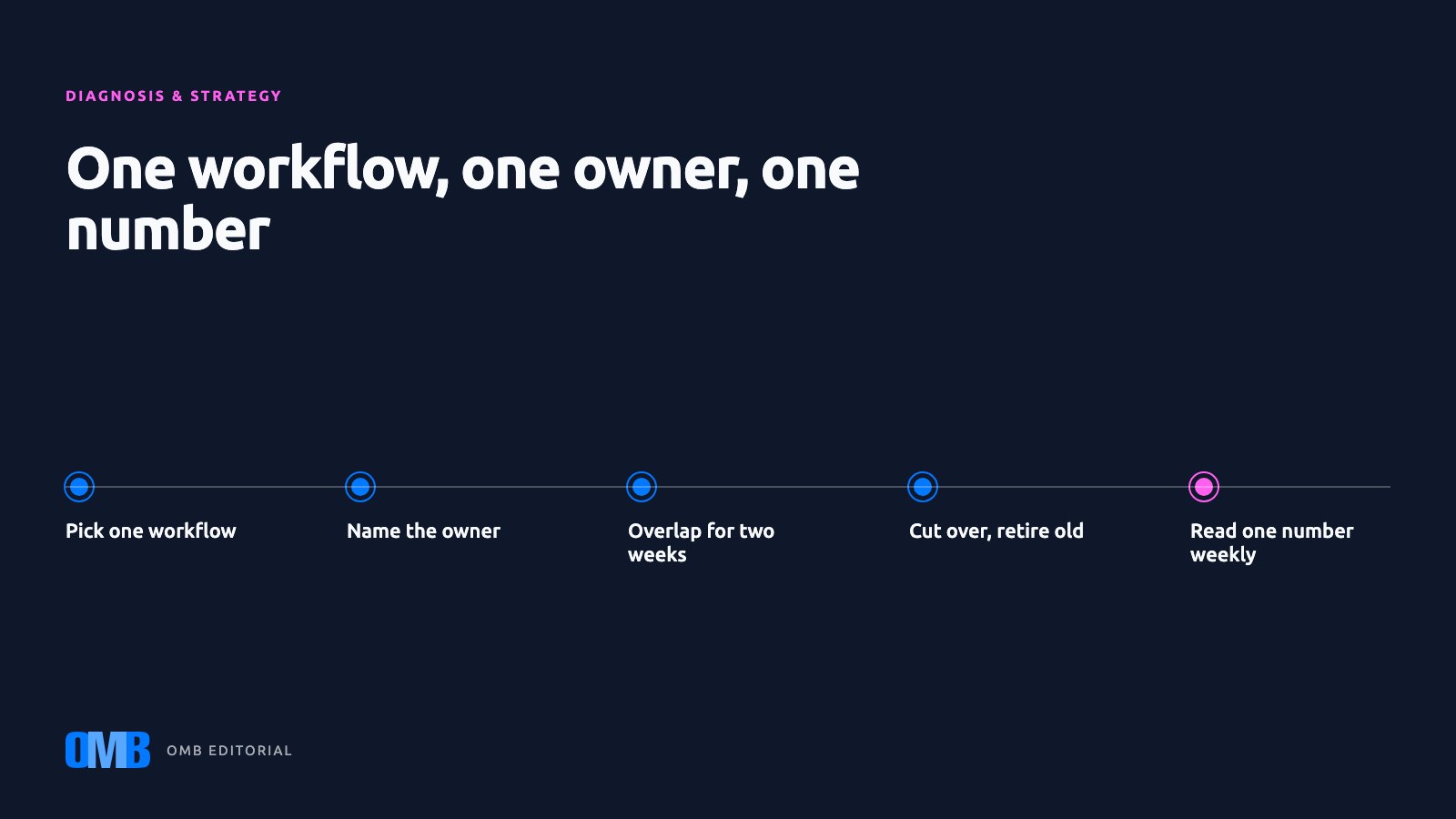
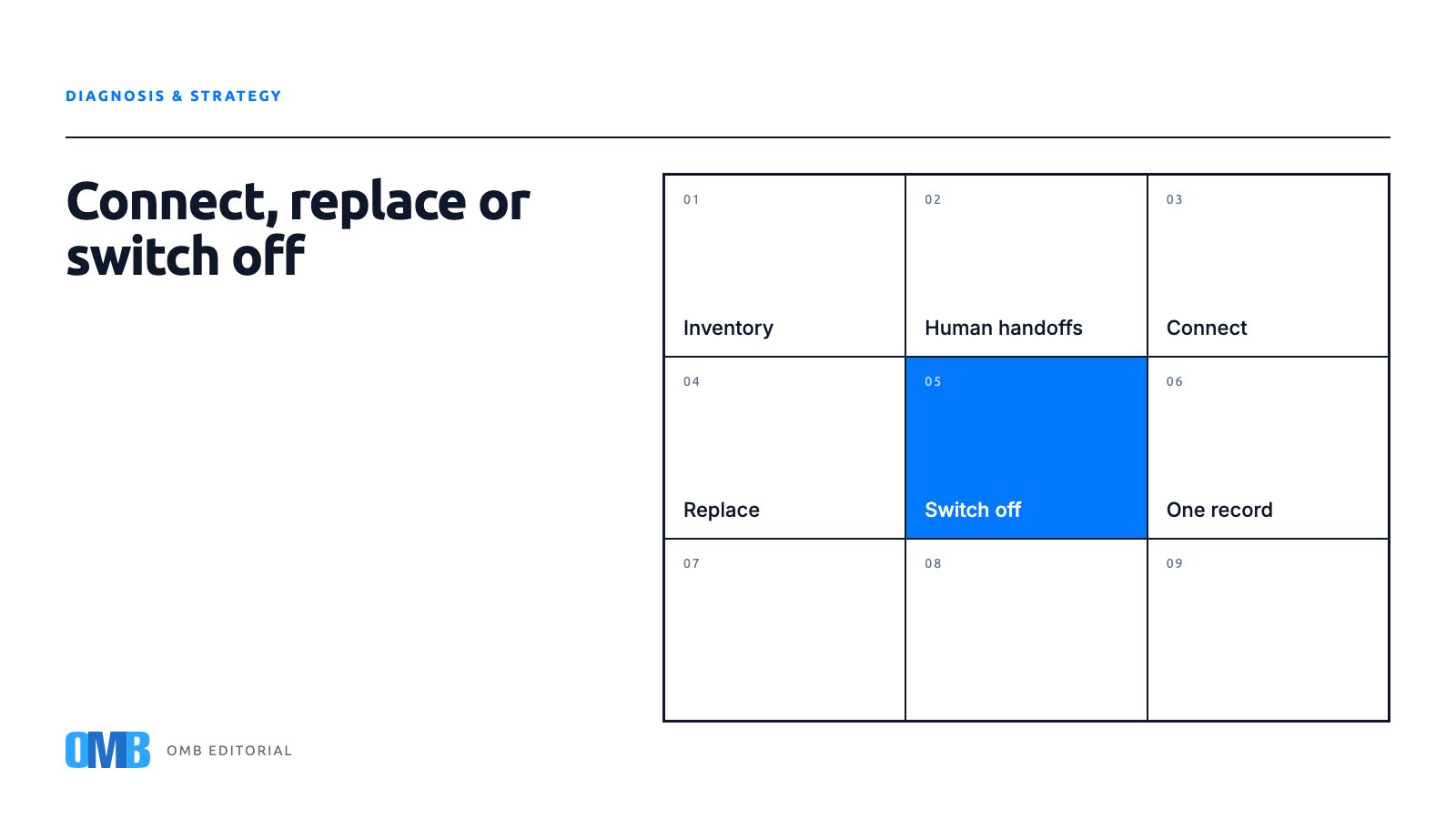
To integrate the systems you already have without rebuilding everything, inventory what each tool uniquely holds, map every handoff and name the person who carries it, decide per link whether to connect, replace or switch off, choose one system of record for each kind of fact, and sequence the changes by the human handoff each one removes.
Ask a mid-sized company what software it runs on and you get a list of eight or nine names. Ask what the business actually runs on and you get a different answer: those tools, plus three spreadsheets, plus two people who move information between them by hand. The second list is the real architecture. The first is the invoice.
July exposes the difference better than any audit. When the person who exports the quotes and re-enters them in the invoicing tool takes two weeks off, the quotes stop becoming invoices. Nothing broke. A handoff that was always performed by a person simply paused with the person. I call it the vacation test, and it is the cheapest diagnostic you will run this year.
The instinct after that discovery is to replace everything with one platform. Sometimes that is right. More often it is expensive, slow, and it trades handoffs you understand for ones you do not. The method below, which follows the same Diagnose, Align, Execute sequence we use in every engagement, is for deciding link by link.
Inventory what each tool uniquely holds
List every system, including the spreadsheets and the shared inbox, and next to each one write the single thing it holds that nothing else holds. The accounting package holds the invoice of record. The CRM holds the conversation history. The project tool holds the dates. If a tool's column is empty, you have found something that exists because it was bought, not because it is needed. If two tools claim the same thing, you have found your first conflict.
Map the handoffs and name who carries each one
Draw the path a customer takes from first inquiry to paid invoice, and mark every point where information leaves one system and enters another. Then write the name of the person who makes that happen. Every arrow with a name on it is an integration performed by a human. Count them. In our experience a company with nine tools has somewhere between ten and twenty such arrows, and the vacation test will tell you which ones matter: those are the handoffs that stop when that person is away.
Decide per link: connect, replace or switch off
Connect when both systems hold something unique and the handoff runs often. Quotes to invoices, inquiries to CRM, calendar to project. Replace when a tool exists only because the previous one could not do something the newer one now does; a separate quoting app next to a CRM that quotes is a candidate. Switch off when the honest answer to "who would notice in a month" is nobody; the July absence often answers that question for you. Write the decision next to each arrow. Most links resolve in under a minute once the criteria are on the table.
Choose one system of record for each kind of fact
A customer, a quote, an invoice, a conversation: each needs exactly one place where the true version lives, and every other tool reads from it. This is the step that removes the retyping. Once the CRM is the record for the customer and the invoicing module is the record for the invoice, the person who used to reconcile the two on Friday afternoon has Friday afternoon back. A platform where those modules already share one record, like the ones described on the modules page, shortens this step; the decision is the same either way.
Sequence by the handoff each change removes
Order the work by how many human arrows each change deletes, and run each change during a low-volume window with the person who used to carry the handoff watching. A change that removes three arrows goes before one that removes one, regardless of how modern the tool is. Measure the result with a single number: how many handoffs are still performed by a person at the end of the quarter. If that number is not falling, the project is buying software rather than integrating it.
Two things tend to surprise leaders who run this method. The first is how much of the estate survives. A tool that holds something unique and connects cleanly stays, even if it is old and unloved. Rebuilding everything was never the goal; removing the arrows with names on them was.
The second surprise is where the AI agents fit. An agent that answers inquiries, drafts quotes, chases invoices and updates the record works only when it can read and write to one system of record. Put it on top of nine disconnected tools and it becomes a tenth thing to reconcile. Put it on top of one record, and it becomes the person who was carrying the handoffs, except it does not take July off.
Run the inventory this month while volume is low and absences make the human arrows visible. Decide the links in August. Execute the first one before Labor Day, and let the next vacation be the test that nothing paused.
Key points
- Write next to every tool the one thing it holds that nothing else does; empty columns are candidates to switch off.
- Map each handoff between systems and name the person who carries it; those names are your integration backlog.
- Decide link by link: connect when both sides hold something unique, replace when a tool exists only for a gap that closed, switch off when nobody would notice in a month.
- Choose one system of record per kind of fact and make every other tool read from it.
- Measure the project by how many handoffs are still human at the end of the quarter.
Frequently asked questions
Should a company replace all its software with one platform?
Rarely all at once. Start by listing what each tool uniquely holds and mapping the handoffs between them. Tools that hold something unique and connect cleanly can stay. Replace the ones that exist only for a gap another tool has since closed, and switch off the ones nobody would miss. A single platform helps most where several modules must share one record.
How do you know which business systems to integrate first?
Count the human handoffs each integration would remove. Draw the path from first inquiry to paid invoice, mark where information is retyped from one system into another, and name who does it. The link that removes the most retyping, or the one that stops entirely when a specific person is on vacation, goes first.
What is a system of record and why does it matter?
It is the one place where the true version of a fact lives: the customer in the CRM, the invoice in the accounting module. Every other tool reads from it rather than keeping its own copy. Without one, people spend time reconciling versions, and any automation or AI agent you add becomes another copy to reconcile.
If the vacation test showed you a handoff that paused with a person, a thirty-minute diagnosis will tell you whether to connect, replace or switch it off.
About the author
 Roger VegaTechnologyOMB Editorial Team
 Part of the OMB Cloud AES agent team, writing from what they see every day operating businesses.